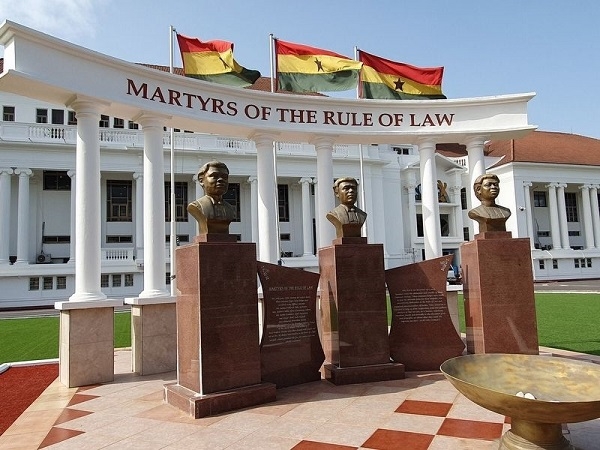
In a landmark constitutional ruling with far-reaching implications for Ghana’s democratic landscape, the Supreme Court has declared the electoral college system used by political parties to select their presidential and parliamentary candidates unconstitutional.
The decision, delivered by the apex court, effectively requires political parties to allow all members in good standing to participate directly in the selection of parliamentary and presidential candidates for national elections, bringing a significant shift to Ghana’s internal party electoral processes.
A Landmark Victory for Internal Party Democracy
The ruling marks one of the most significant judicial interventions in Ghana’s political system since the adoption of the 1992 Constitution. The Supreme Court held that restricting voting rights to selected delegates or electoral colleges violates Article 55(5) of the Constitution, which requires the internal organization of political parties to conform to democratic principles.
According to the court, every registered member of a political party who is in good standing has the constitutional right to participate in the election of the party’s presidential and parliamentary candidates.
The judgment effectively invalidates delegate-based electoral systems that have long been employed by major political parties, including the National Democratic Congress (NDC), the New Patriotic Party (NPP), and the Convention People’s Party (CPP).
Electoral Commission Given Constitutional Responsibility
The Supreme Court further clarified that the Electoral Commission (EC) is not merely an observer of political party activities but has a constitutional obligation to ensure that the internal operations of political parties comply with Article 55(5) of the Constitution.
This aspect of the judgment strengthens the EC’s oversight role and may require the Commission to closely scrutinize future party constitutions, regulations and primary election procedures to ensure they promote equal political participation among members.
While the ruling introduces sweeping reforms, the Supreme Court emphasized that it would not invalidate previous elections, appointments or decisions conducted under the electoral college system.
The court ruled that all actions taken in good faith before the judgment remain legally valid, providing certainty and avoiding disruption to Ghana’s current political and parliamentary structures.
Split Decision Among the Justices
The judgment was not unanimous. Justices Samuel Kwame Adibu-Asiedu and Ernest Yao Gaewu dissented from the majority opinion.
The Supreme Court announced that the detailed legal reasoning behind the decision will be released on August 5, 2026, offering political parties, legal practitioners and constitutional scholars greater insight into the constitutional interpretation adopted by the majority.
Political Parties Face Major Constitutional Reforms
The ruling is expected to compel political parties across Ghana to amend their constitutions and electoral regulations to comply with the Constitution.
Political analysts believe the decision could substantially expand grassroots participation in party politics, reduce the influence of delegate blocs, and reshape campaign strategies ahead of future presidential and parliamentary primaries.
At the same time, the judgment presents logistical and financial challenges, as political parties may now be required to organize nationwide internal elections involving their entire membership rather than limited delegate conferences.
A New Chapter for Ghana’s Democracy
The Supreme Court’s decision is likely to become one of the most consequential constitutional rulings in Ghana’s Fourth Republic. By affirming that democratic principles must extend beyond general elections into the internal governance of political parties, the court has reinforced the constitutional principle that political participation should be broad, inclusive and equitable.
As political parties prepare to review their constitutions and electoral processes, the judgment is expected to shape Ghana’s political landscape for years to come, potentially strengthening internal democracy and enhancing the voice of ordinary party members in selecting those who will ultimately contest national elections.