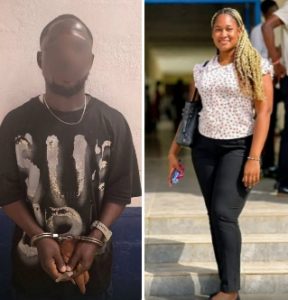
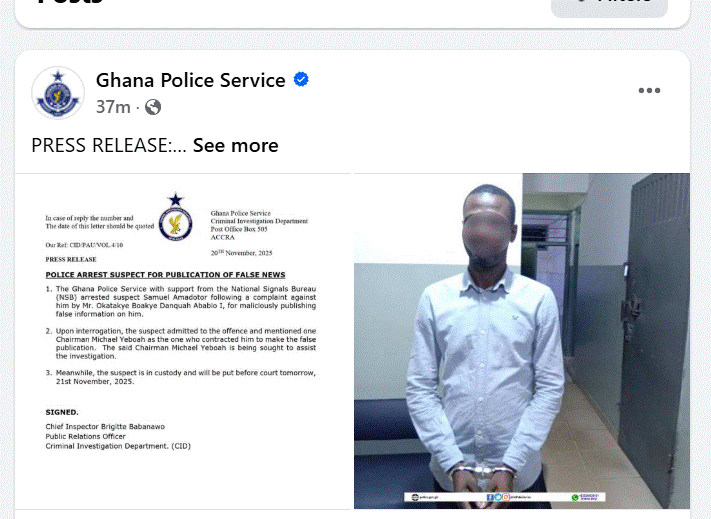
The Ghana Police Service, with support from the National Signals Bureau (NSB), has arrested Samuel Amadotor for allegedly publishing false and malicious information. His arrest followed a formal complaint lodged by Okatakye Boakye Danquah Ababio I, prompting immediate police action.
According to an official police statement, Amadotor admitted to the offence during interrogation and identified Chairman Michael Yeboah as the individual who allegedly contracted him to disseminate the false information. Police say efforts are underway to locate Chairman Yeboah to assist in ongoing investigations.
The statement further confirmed that Amadotor is currently in custody and scheduled to appear before court on 21st November 2025.
However, the arrest has triggered strong public reactions, especially from the media community. Investigative journalist Manasseh Azure Awuni has publicly questioned the legality and duration of Amadotor’s detention.
In a Facebook post, Manasseh criticised the Police for keeping the suspect in custody beyond the constitutionally permitted time frame.
“Why have you not put him before the court for this long? Some sources close to him say he has been in custody for more than 48 hours. What law allows you to keep a suspect for this long without putting him before the court?”
— Manasseh Azure Awuni
He also renewed his long-standing advocacy for the repeal of Ghana’s false news law, arguing that the legislation has been repeatedly abused to target journalists, content creators, and critics.
“THIS LAW ON FALSE NEWS SHOULD BE REPEALED. If the person who made the report feels defamed, he can sue the journalist. This law has been abused for too long and we must stop it,”
he added.
Manasseh’s comments have reignited the national conversation on press freedom, police accountability, and the balance between combating misinformation and protecting fundamental human rights.
As the case proceeds to court, stakeholders in Ghana’s media, civil society, and legal communities are expected to closely monitor developments, given the broader implications for media freedom, digital rights, and law enforcement practices in the country.