The Government of Ghana, through the Ministry of Local Government, Decentralisation and Rural Development (MLGDRD), has unveiled an ambitious plan to construct modern 24-hour markets across all 261 Metropolitan, Municipal, and District Assemblies (MMDAs) in the country.
This initiative forms a major pillar of the government’s broader “24-Hour Economy” agenda, which seeks to stimulate economic activity, create sustainable jobs, and enhance urban infrastructure to support round-the-clock commerce.
Key Features of the 24-Hour Modern Markets
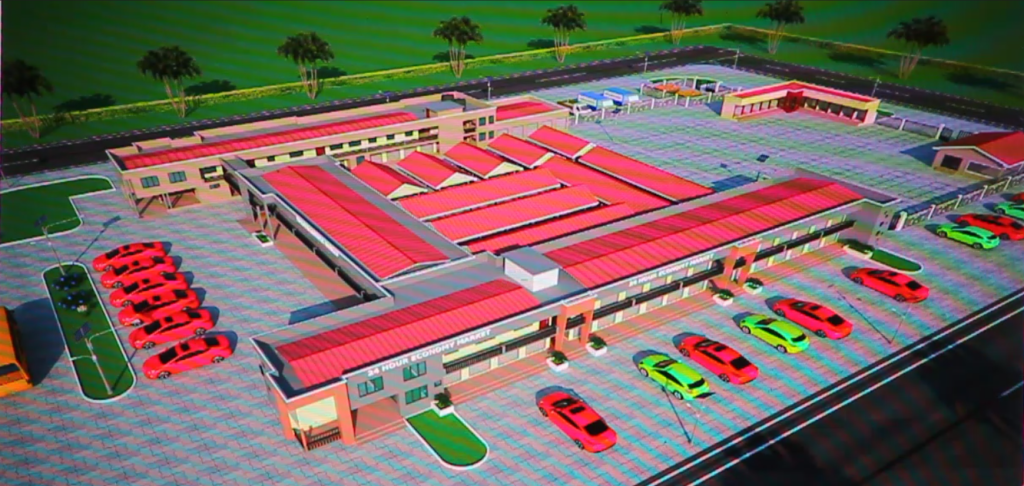
According to the Ministry, the new markets will go beyond traditional trading centers, becoming comprehensive, multi-functional facilities designed to enhance public health, safety, and convenience.
Each market will feature:
- Modern sanitation and waste management systems
- Reliable water supply
- Hygienic vendor spaces
- Proper drainage and flood control systems
- Security and lighting for night-time operations
The 24-hour model will enable traders and service providers to operate beyond conventional hours, encouraging productivity, flexibility, and local investment.
“No District Left Behind” – Minister Ahmed Ibrahim
Speaking at the unveiling, the Minister for Local Government, Ahmed Ibrahim, said construction is scheduled to begin in December 2025, with a completion target of December 2027 for districts that have secured suitable land.
“The goal is to transform our local markets into safe, modern, and accessible trading hubs that can operate efficiently throughout the day and night,”
— Hon. Ahmed Ibrahim, Minister for Local Government.
He emphasized that including all 261 MMDAs underscores the government’s commitment to inclusive national development.
“We want every district, urban or rural, to have a functioning 24-hour market that supports local economic growth and creates decent jobs, particularly for women and youth,” he added.
Economic and Social Impact of the 24-Hour Markets
Economists say the nationwide 24-hour market initiative could generate a significant multiplier effect across multiple sectors, including transport, logistics, food supply chains, and night-time services.
By formalizing informal trading and providing modern infrastructure, the project is expected to:
- Boost local revenue mobilization
- Reduce congestion in urban centers
- Improve public safety and hygiene
- Promote sustainable urban development
The markets are also anticipated to create thousands of direct and indirect jobs, from vending and logistics to cleaning, security, and market management.
Addressing Longstanding Market Challenges
The Ministry highlighted that the 24-hour markets will address decades-old problems associated with traditional trading areas such as:
- Poor sanitation and waste disposal
- Flooding due to inadequate drainage
- Lack of night-time lighting and security
- Disorganized trading environments
These upgrades will help build cleaner, safer, and more efficient public spaces while encouraging environmental sustainability and organized trading culture.
“Clean, safe, and efficient markets are essential to achieving our broader vision of resilient, inclusive, and liveable urban environments,”
— Ahmed Ibrahim reiterated.
Sustainability, Oversight, and Local Governance
The success of the 24-hour market initiative will depend on effective coordination among national, regional, and local authorities. Analysts have cautioned that maintaining 24-hour operations could come with added costs for security, lighting, energy, and sanitation, calling for strong management systems and long-term sustainability planning.
Each MMDA will play a leading role in:
- Identifying and securing land
- Supervising construction
- Managing completed facilities
- Engaging local stakeholders and vendors
This aligns with Ghana’s decentralisation and urban development agenda, which empowers local authorities to manage key infrastructure that directly affects citizens’ livelihoods.
A Major Step Toward Ghana’s 24-Hour Economy Vision
The 24-hour modern market project is seen as a cornerstone of Ghana’s economic transformation, driving inclusive growth, expanding employment, and rebalancing rural-urban economies.
Once completed, the markets are expected to reshape Ghana’s retail landscape, promote sustainable growth, and strengthen the foundation for continuous national productivity.