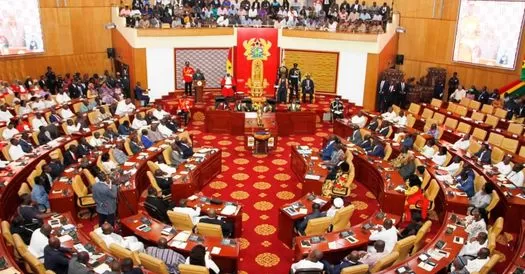
Parliament has officially passed the COVID-19 Health Recovery Levy (Repeal) Bill, 2025, bringing an end to the levy introduced at the height of the pandemic to mobilise revenue for Ghana’s health response and economic recovery efforts.
The COVID-19 Health Recovery Levy, established under Act 1068 in 2021, formed part of emergency fiscal measures to stabilise the nation during the global health crisis. However, according to government, the levy has now outlived its purpose.
Part of Broader Tax Reform Agenda
In the 2025 Budget Statement, government pledged to simplify the indirect tax regime and reduce the cost of doing business as part of measures to stimulate private sector-led growth. One of the key reforms under this strategy was the repeal of the levy.
Minister for Finance, Dr. Cassiel Ato Forson, emphasised that the repeal forms part of a comprehensive reform of the Value Added Tax (VAT) system aimed at creating a more transparent, equitable, and growth-focused consumption tax structure.
He urged Parliament to approve the repeal, stating that Ghana must transition away from temporary emergency taxes adopted during the pandemic.
GHS 3 Billion Back Into Citizens’ Pockets
Government says the repeal will put over GHS 3 billion back into the hands of Ghanaians, providing immediate financial relief and boosting consumer spending.
This announcement, however, raises questions about how government intends to make up for the significant revenue shortfall. Dr. Ato Forson assured the House that ongoing tax reforms and improved efficiency in the tax system will compensate for the loss.
Minority Raises Red Flags: “Don’t Celebrate Yet”
The Minority in Parliament has cautioned against celebrating the repeal too soon. According to the Minority Leader, government often removes taxes publicly only to quietly introduce new ones later or increase costs through indirect means.
He referenced the Energy Sector Levy, previously described as the “Dumsor levy,” as an example of a tax that has continued to burden Ghanaians long after its introduction.
The Minority also pointed to an 18% increase in electricity tariffs as additional proof that the removal of the COVID-19 levy should not be viewed in isolation.
A Debate Far From Over
While the passage of the repeal bill marks a significant step in Ghana’s tax reform efforts, the political debate over revenue measures, public accountability, and the true cost of living is expected to continue.
For now, the government maintains that the move aligns with its commitment to ease the tax burden on citizens and create a more business-friendly economic environment.