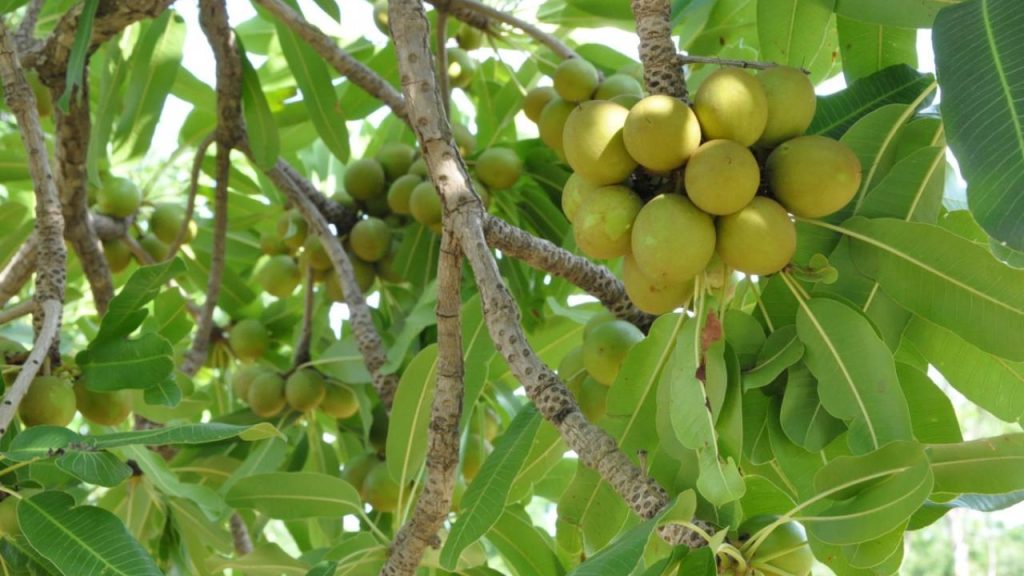
President John Dramani Mahama has described the indiscriminate felling of shea trees in Ghana as criminal and has directed metropolitan, municipal and district assemblies (MMDAs), working in collaboration with security agencies, to strictly enforce laws protecting the country’s shea resources.
According to the President, decisive enforcement is necessary to safeguard shea trees, which serve as a critical source of income for local communities, particularly women, who dominate Ghana’s shea industry.
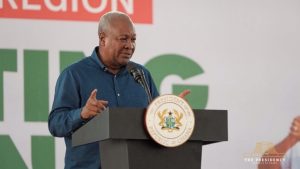
Speaking at the launch of a Shea Park Resource Hub at the Wa Naa’s Palace in Wa last Saturday, President Mahama commended the Wa Naa for taking a firm stance against the destruction of shea trees.
“I want to thank my father, the Wa Naa, for making a declaration that the chopping down of shea nut trees was unacceptable, and that assemblies and the security agencies should enforce it,” the President stated.
President Mahama emphasised that beyond their economic value, shea trees are part of Ghana’s cultural identity and ecological heritage, especially within the savannah belt. He noted that although Ghana ranks among the world’s leading producers of shea nuts, women, who form the backbone of the sector, remain trapped at the lowest end of the value chain.
He explained that the newly launched Shea Park Resource Hub is designed to reverse this imbalance through value addition, industrialisation and inclusive growth.
“This initiative reflects our determination that national development must grow from the regions outwards, not only from the centre,” President Mahama said, adding that the project aligns with flagship government policies such as The Big Push and the 24-Hour Economy.
The initiative forms part of a broader regional development blueprint titled “Revealing Potential Pathways for Socio-Economic Development 2025 and Beyond,” which identifies shea as a growth nucleus for the Upper West Region and northern Ghana as a whole.
When fully operational, the Shea Park Resource Hub is expected to empower more than 7,000 women, create thousands of jobs for the youth, and anchor value chains for related commodities including groundnuts, soybeans, dawadawa, cotton and honey.
The hub will host modern shea processing facilities for cosmetic, food and pharmaceutical markets, alongside quality control laboratories, training centres, storage and logistics infrastructure, solar-powered energy systems, water recycling plants, and export facilitation services.
President Mahama urged residents of the Upper West Region to take ownership of the project and protect it, stressing that it marks the beginning of a broader transformation agenda.
“Let us move from being spectators of development to becoming architects of our own development,” he urged.
Describing the project as a game changer, the Upper West Regional Minister, Charles Lwanga Puozuing, said the resource hub would improve livelihoods, expand access to technology and markets, and strengthen inclusive agribusiness in the region.
On behalf of traditional authorities, Naa Kadri Ibrahim, Secretary to the Wa Naa, pledged the full support of chiefs and people of the region for the initiative and renewed calls for increased investment in roads, healthcare, agriculture and education to accelerate development in the Upper West.