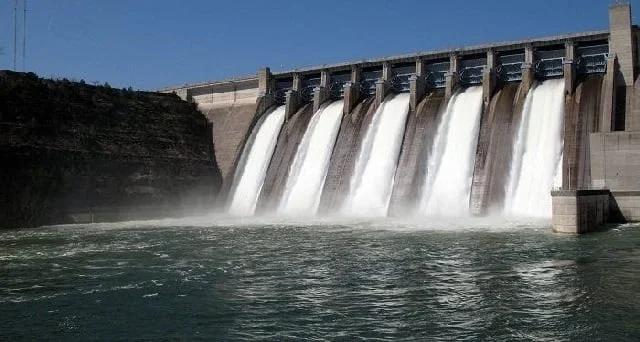
Farmers and communities living along the White Volta River Basin in Ghana are bracing themselves for the annual spillage of the Bagre and Kompienga Dams in Burkina Faso, which is now scheduled to begin on Monday, August 25, 2025.
The announcement has sparked fear and anxiety among residents, many of whom say the short notice puts their livelihoods at risk. Farmers worry that their crops, livestock, and farmlands could be destroyed, worsening economic hardship in already vulnerable communities.
Farmers Express Concerns Over Short Notice
Speaking to reporters, Mr. Samuel Azure, a peasant farmer in the Binduri District, lamented the abrupt change in schedule:
“The notice is too short. We received the information only a few days ago. Initially, the spillage was scheduled for August 27, but it was suddenly moved to August 25, and we were only told last Saturday.”
According to him, many farmers in the area have not yet harvested their maize and early millet (naara). With river levels already high due to recent rains, he fears the spillage could wipe out entire farms, leading to food insecurity for many households.
Rising Water Levels Prompt Early Spillage
The decision to release water earlier than planned was made by SONABEL, the Burkinabé power company that manages the dams. A statement from Ghana’s Water Resources Commission (WRC) revealed that as of Saturday, August 23, 2025, the Bagre Dam had reached 90.24% of its capacity (234.27m), just 0.73m below its maximum retention level.
Similarly, the Kompienga Dam is currently at 177.90m (79.36% capacity), only 2.10m below its retention level—prompting fears of heavy downstream flooding.
Annual Flooding: A Persistent Challenge
Over the years, the Bagre Dam spillage has caused widespread flooding in northern Ghana, particularly in the Upper East and North East Regions. The floods have destroyed farmlands, killed livestock, displaced families, and claimed lives. Communities along the White Volta and its tributaries—including Binduri, Bawku West, Garu, Tempane, Talensi, Nabdam, and Bawku Municipal—are usually the hardest hit.
Farmers cultivating rice, maize, millet, and vegetables often bear the brunt of the disaster, with hectares of farmland submerged each year. This results in loss of income, food shortages, and increased poverty among already struggling families.
Authorities Urge Precautionary Measures
Mr. Jesse Kazapoe, Head of the White Volta Basin at the WRC, assured residents that measures are being taken to protect lives:
“We have advised communities to move to higher grounds for safety. While we may not be able to save all crops, our priority is to prevent loss of lives.”
The Peasant Farmers Association of Ghana (PFAG) has also urged farmers to avoid cultivating too close to the White Volta River to reduce annual losses. Mr. Isaac Pabia, PFAG’s Regional Focal Person, emphasized the need for enforcing buffer zones along water bodies.
Meanwhile, the National Disaster Management Organisation (NADMO) has activated its regional teams. Mr. Christopher Beokena, Deputy Regional Director of NADMO, said:
“Our district directors are sensitizing farmers about the spillage and safety measures. Some farmers have already begun harvesting early to minimize losses, even though some crops are not yet mature.”
Outlook
As the spillage begins, farmers and communities along the White Volta are urged to stay alert, move to safer areas, and heed warnings from local authorities. While the annual Bagre Dam spillage is unavoidable, experts insist that long-term solutions—such as flood management infrastructure, buffer enforcement, and early warning systems—are urgently needed to reduce the devastating impact on farming communities.