In the Upper East Region of Ghana, centered around towns like Sandema, Fumbisi, Wiaga, etc live the Bulsa people. While they refer to themselves as Bulsa and speak the Buli language, much of Ghana knows them by the name “Kanjagas.”
But who are the Bulsa, and how did they earn their reputation as some of the toughest warriors in West African history?
The Origin of the Name “Kanjaga”
The name “Kanjaga” actually refers to one of the major Bulsa towns. During the colonial era, when the British were recruiting men for the Gold Coast Constabulary (the precursor to the Ghana Police and Army), many of the strongest recruits came from the town of Kanjaga.
Over time, Southerners and colonial officers began using “Kanjaga” as a blanket term for anyone from the Bulsa area. Today, the name is synonymous with strength, reliability, and a “never-say-die” attitude.
The Defeat of Babatu (1896)
The defining moment in Bulsa history is their resistance against the notorious Islamic slave raiders of the late 19th century, led by Babatu.
While many other groups fell to Babatu’s superior cavalry and firearms, the Bulsa did something extraordinary. In 1896, the various Bulsa divisions usually independent of one another, united under a single cause. At the Battle of Sandema, they dealt Babatu a crushing defeat, effectively ending the era of large scale slave raiding in Northern Ghana.
To this day, the Bulsa are proud of the fact that they were never “conquered” by these raiders, they fought for their land and won.
The Feok Festival: Celebrating Victory
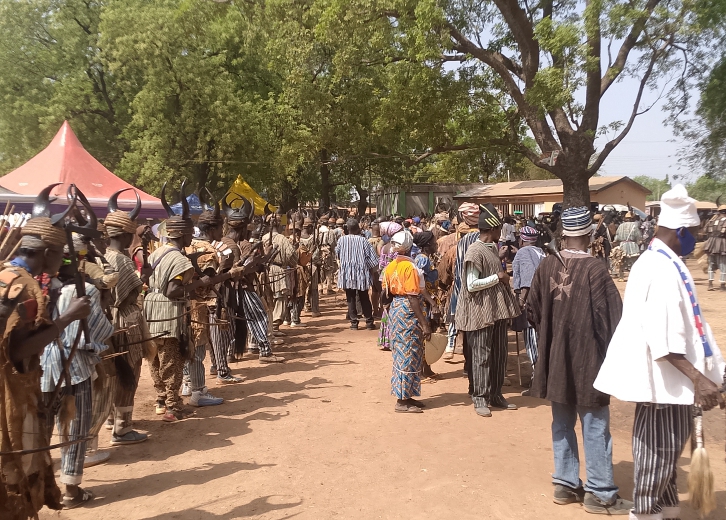
This historic victory is celebrated every December during the Feok Festival.
- Meaning: “Feok” means “abundance” or “plenty” in Buli, referencing the post-harvest season.
- The War Dance: The highlight of the festival is the war dance, where men dress in traditional smocks (batakaris), carry shields and spears, and reenact the battles fought by their ancestors. It is a powerful display of cultural identity and ancestral pride.
The Backbone of Ghana’s Security Services
Because of their warrior lineage and disciplined nature, the Bulsa (Kanjagas) have historically been over-represented in the Ghana Armed Forces and the Ghana Police Service. For decades, if you saw a high-ranking officer with a reputation for being strict and fearless, there was a good chance he hailed from the Bulsa lands.
Cultural Wisdom and the Land
Beyond warfare, the Bulsa are master farmers. The Gbedembilisi ,Wiesi and Uwasa Valleys are famous for being some of the most fertile rice-growing areas in West Africa. Their social structure is built on a deep respect for the Earth Priest (Teng-Nyono) and the traditional chiefs, ensuring a society that values communal growth and land preservation.
The “Kanjaga” reputation is so strong in Ghana that it has entered the local lexicon. When someone says a person is “Kanjaga-tough,” they aren’t just talking about physical strength—they are talking about the spirit of a people who refused to be enslaved and stood their ground against all odds.