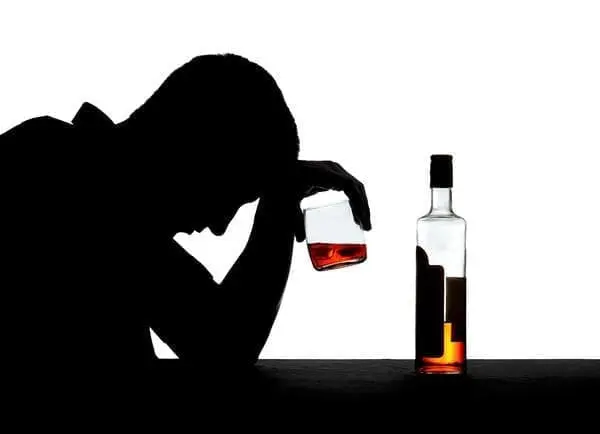
Every minute, someone dies globally from alcohol-related causes, according to the World Health Organization (WHO), a growing concern that has reignited calls for Ghana to pass its National Alcohol Policy, first drafted in 2017 but yet to be implemented.
Despite the industry’s significant tax contributions, public health advocates and road safety officials warn that Ghana’s delay in enacting the policy is costing lives and worsening social harm.
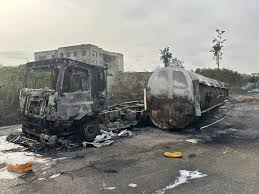
Recent data from the National Road Safety Authority (NRSA) paints a troubling picture: 9.2% of truck drivers in Ghana operate above the legal blood alcohol limit, and 1% wrongly believe that alcohol enhances driving performance.
The NRSA says this clearly shows that many drivers knowingly break alcohol laws, putting passengers and pedestrians at risk.
NRSA Pushes for Lower Blood Alcohol Limit
Speaking at a high-level stakeholder meeting on Friday, November 7, 2025, the Director for Research, Monitoring, and Evaluation at NRSA, Alexander Ayatah, called for Ghana to reduce its current Blood Alcohol Concentration (BAC) limit from 0.08 to 0.04, in line with global best practices.
“For now, what we are looking at is the alcohol level that we call Blood Alcohol Concentration (BAC) is 0.08 that is being used in Ghana. I’m hoping that, of course, that number will come down to 0.04,” Ayatah stated.
The proposed adjustment aims to significantly cut down alcohol-related road crashes and fatalities, especially involving commercial drivers and motorcyclists.
Alcohol Advertising and Bars Near Schools Under Scrutiny
Beyond road safety, public health campaigners are raising red flags about the unchecked proliferation of drinking bars near schools, a direct violation of existing regulations that require a 200-meter buffer zone between alcohol-selling outlets and educational institutions.
Chairman of the Ghana Alcohol Policy Alliance (GhanAPA), Benjamin Anabila, lamented the lack of enforcement and urged Parliament to pass the policy to enable stronger regulation.
“You go into some of our educational institutions, even on some campuses we have bars. Basic schools are not spared as drinking spots continue to spring up nearby. We believe that once the law is passed and clearly stipulates these boundaries, enforcement will follow,” Anabila said.
Parliament Promises Swift Passage of the Policy
The draft alcohol control regulations, introduced in 2017, remain stalled, pending a Legislative Instrument (LI) to operationalize the National Alcohol Policy.
If passed, the LI would regulate alcohol production, sale, advertising, and consumption, aiming to reduce the harmful effects of alcohol on individuals, families, and society.
Chairman of Parliament’s Health Committee, Dr. Mark Kurt Nawaane, has pledged a swift passage of the LI once it reaches the floor of Parliament.
“Once the LI reaches Parliament, we will pass it within a month,” Dr. Nawaane assured.
Alcohol: A Global and National Health Threat
According to the World Health Organization (WHO), alcohol consumption is linked to over 3 million deaths annually, representing 5% of all global deaths.
Disturbingly, 13% of these fatalities occur among young people aged 20 to 39 years.
Health experts warn that excessive alcohol use is a major contributor to cancer, suicide, domestic violence, road traffic injuries, and premature death.
In Ghana, where drinking is often normalized in social settings, experts say a strong National Alcohol Policy would not only save lives but also protect future generations from addiction and its ripple effects.
As Ghana continues to grapple with increasing cases of alcohol-related road crashes and health complications, stakeholders insist that passing the National Alcohol Policy is not just a legal necessity but a moral and public health imperative.
The coming months will reveal whether policymakers can turn years of advocacy into tangible legislative action.