Every community has people whose contributions to its history are not always immediately recognised, yet whose work becomes increasingly valuable with time. They are the researchers, writers, archivists, storytellers, historians and cultural enthusiasts who understand that a people’s identity can be weakened when its history, traditions, language and collective memory are not properly documented.
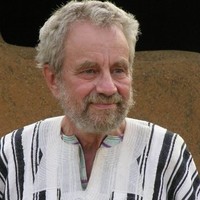
For Buluk, there are individuals who have devoted significant portions of their lives to recording and studying the history, culture, traditions, beliefs and way of life of the Bulsa. As we begin a series celebrating people who have contributed to the documentation and preservation of Buluk’s heritage, there may be no more appropriate place to begin than with Dr. Franz Kröger.
Kröger, a retired teacher and anthropologist, developed a long-standing scholarly interest in the Bulsa and Koma peoples of northern Ghana. His work has covered a remarkably broad range of subjects, including religion, language, history, traditional institutions, material culture, social organisation and cultural practices.
His contribution is particularly significant because much of what is known about earlier aspects of Bulsa society exists not only in oral memory but also in written records produced through decades of research.
A scholar who made Bulsa culture a subject of serious study
Dr. Kröger’s academic work demonstrates a sustained interest in understanding Bulsa society from different dimensions rather than treating culture as something limited to ceremonies or traditional beliefs.
Among his notable publications is Übergangsriten im Wandel: Kindheit, Reife und Heirat bei den Bulsa in Nord-Ghana, a study dealing with childhood, maturity and marriage among the Bulsa. The work was published as part of the Kulturanthropologische Studien series.
He also wrote Ancestor Worship among the Bulsa of Northern Ghana: Religious, Social and Economic Aspects, a study examining ancestor worship and its religious, social and economic dimensions within Bulsa society. The work was published in 1982 and was subsequently reviewed in the academic journal Africa.
Another important contribution is his Buli-English Dictionary: With an Introductory Grammar and an Index English-Buli, published in 1992. The dictionary runs to hundreds of pages and represents an important attempt to document the Buli language in a systematic written form. Academic records confirm the publication and its place within the Researches on African Languages and Cultures series.
Language is one of the strongest carriers of culture. Words often contain histories, values, beliefs and ways of understanding the world. Consequently, a serious effort to document Buli is also, in an important sense, an effort to preserve part of Bulsa cultural heritage.
Documenting the material culture of the Bulsa
Kröger’s contribution extends beyond language and religion.
His two-volume work Materielle Kultur und traditionelles Handwerk bei den Bulsa (Nordghana), published in 2001, examined material culture and traditional craftsmanship among the Bulsa. The work has been catalogued and reviewed within academic circles, demonstrating the scholarly interest in his research.
The University of Münster also records an extensive collection of Bulsa material culture associated with Kröger’s research. According to the university, he assembled a collection of approximately 500 objects representing Bulsa material culture and made the collection available to the Institute of Ethnology from 1975 for use as a teaching collection. The collection later became part of the Forum der Völker in Werl.
This aspect of his work is especially important when thinking about cultural preservation. Traditional objects can disappear as lifestyles change, technologies develop and older forms of craftsmanship become less common. Recording and preserving such material evidence provides future generations with another way of understanding how earlier Bulsa communities lived and worked.
Recording Bulsa history and experiences
Kröger also turned his attention to some of the difficult chapters in Bulsa history.
His work “Raids and Refuge: The Bulsa in Babatu’s Slave Wars” examines the experiences of the Bulsa during the slave-raiding period associated with Babatu and the defensive strategies employed by communities during attacks. The work has been catalogued by the Smithsonian Libraries and Archives as dealing with Bulsa history, slave trade, military history and the use of caves as places of refuge.
Research such as this matters because history is not simply a collection of dates and names. It is also the story of how communities responded to danger, preserved themselves, moved from one place to another and adapted to changing circumstances.
For a people whose history has traditionally been transmitted largely through oral accounts, written documentation can provide an additional record that future researchers can consult alongside oral traditions and other historical sources.
Religion, rituals and traditional beliefs
Religion and traditional belief systems form another important part of Kröger’s body of work.
His publications include research on the ritual calendar of the Bulsa, as well as studies of religious practices and beliefs. Academic bibliographies also list his 2013 study on the Mungo cult among the Bulsa and Koma.
These studies offer documentation of aspects of Bulsa religious life that might otherwise become difficult for future generations to reconstruct.
Culture is constantly changing. Some practices disappear, some are modified, while others survive in new forms. Documentation therefore provides an opportunity for future generations to understand not only what their ancestors did, but also how and why particular traditions existed.
A connection to the Buluk journal
Perhaps one of the most visible parts of Kröger’s continuing contribution to Bulsa cultural documentation is his association with Buluk – Journal of Bulsa Culture and Society.
The journal’s website describes Buluk as a journal dedicated to Bulsa culture and society and provides access to issues covering subjects ranging from education, religion and missions to cultural and social change, chieftaincy, Bulsa history, migration, women, Bulsa South District, cultural heritage and tourism, and health.
The journal’s archive now provides an important digital doorway into research and writing about Buluk. Its website includes issues dating back to Buluk 1 in 1999, alongside a Bulsa bibliography, Bulsa history resources, an index of earlier issues and links to publications.
Importantly, the website also provides a dedicated link to Franz Kröger’s publications, making his body of work more accessible to people interested in researching Bulsa history and culture.
For students, researchers and members of the Bulsa community themselves, such an archive can be extremely valuable.
Why Kröger’s work matters to Buluk today
It is easy for younger generations to assume that the history of a community will always be available whenever they want to learn about it. That assumption can be dangerous.
Memories fade. Languages change. Traditional practices disappear. Old buildings and objects deteriorate. Elders pass away, taking with them knowledge that may never have been written down.
This is why the work of people who deliberately document culture matters.
Dr. Kröger’s body of work covers areas that are central to understanding Bulsa identity: language, religion, history, social life, traditional practices, material culture and craftsmanship.
His Buli-English Dictionary, for example, provides a written resource for studying Buli. His studies of religion and rituals record aspects of traditional belief systems. His research into material culture and traditional craftsmanship documents physical expressions of Bulsa life, while his historical studies contribute to the written record of experiences that shaped the Bulsa people.
Taken together, these works form an extensive body of documentation about Buluk.
Celebrating those who preserve our story
The purpose of celebrating people such as Dr. Franz Kröger is not to suggest that the preservation of Buluk’s history belongs to one individual. Far from it.
Bulsa elders, traditional authorities, historians, researchers, writers, teachers, linguists, journalists, photographers, cultural activists and ordinary community members have all contributed, in different ways, to keeping aspects of Bulsa identity alive.
But recognising individual contributions is important because it reminds us that cultural preservation requires deliberate effort.
Dr. Kröger’s story also raises an important question for the present generation of Bulsa: Who is documenting the Buluk of today for the people of tomorrow?
The Bulsa community is changing rapidly. Migration, technology, formal education, urbanisation, social media and globalisation are transforming how people live and communicate. These changes are not necessarily negative, but they make documentation increasingly important.
The task therefore cannot end with the work of earlier researchers. A new generation must continue recording oral histories, traditional knowledge, Buli vocabulary, family histories, festivals, music, architecture, crafts, migration stories, traditional institutions and the experiences of contemporary Bulsa communities.
Beginning with Dr. Franz Kröger
There are many people whose contributions deserve to be remembered when the story of documenting and preserving Buluk is told.
But as we begin this journey of recognising the individuals who have helped record Bulsa history, culture and identity, Dr. Franz Kröger provides a fitting starting point.
For decades, his research has created written and material records of different aspects of Bulsa life. His publications provide resources for scholars, students and anyone seeking to understand the people and culture of Buluk. His association with Buluk – Journal of Bulsa Culture and Society has also helped sustain a platform dedicated specifically to the study and documentation of Bulsa society.
His work reminds us of a simple but profound truth: a people who preserve their history give future generations the opportunity to understand where they came from.
For anyone interested in exploring Dr. Kröger’s work and learning more about Bulsa history and culture, the Buluk – Journal of Bulsa Culture and Society website provides access to journal issues, bibliographic resources, historical materials and a dedicated collection of links to Kröger’s publications.
Explore Buluk – Journal of Bulsa Culture and Society
And perhaps that is the most fitting way to honour people who have helped preserve Buluk: not merely by mentioning their names, but by reading the records they left behind, learning from them and continuing the work of documenting our own story.
Sources
- Buluk – Journal of Bulsa Culture and Society. Buluk online archive, including journal issues, Bulsa bibliography, historical resources and links to publications by Franz Kröger.
Buluk – Journal of Bulsa Culture and Society - University of Münster / Franz Kröger. Bibliographic record of Franz Kröger’s academic publications, including Buli-English Dictionary, Ancestor Worship among the Bulsa of Northern Ghana and Materielle Kultur und traditionelles Handwerk bei den Bulsa.
- Kröger, Franz (1992). Buli-English Dictionary: With an Introductory Grammar and an Index English-Buli. Münster/Hamburg: LIT Verlag. The work contains 572 pages and is listed in major linguistic bibliographic databases.
- Kröger, Franz (1982). Ancestor Worship among the Bulsa of Northern Ghana: Religious, Social and Economic Aspects. Hohenschäftlarn: Klaus Renner Verlag.
- Kröger, Franz (1978). Übergangsriten im Wandel: Kindheit, Reife und Heirat bei den Bulsa in Nord-Ghana. Hohenschäftlarn: Klaus Renner Verlag.
- Kröger, Franz (2001). Materielle Kultur und traditionelles Handwerk bei den Bulsa (Nordghana). Münster: LIT Verlag, 2 volumes.
- Kröger, Franz (2008). “Raids and Refuge: The Bulsa in Babatu’s Slave Wars.” Research Review, Vol. 24, No. 2, pp. 25–38.
- Kröger, Franz (2009). “Rhymes in Buli Proverbs, Songs and Poems.” Research Review, Vol. 25, No. 1, pp. 43–50.
- Kröger, Franz (1984). “The Notion of the Moon in the Calendar and Religion of the Bulsa (Ghana).” Systèmes de pensée en Afrique noire, No. 7, pp. 149–151.
- Kröger, Franz (2013). “Das Böse im göttlichen Wesen. Der Mungokult der Bulsa und Koma (Nordghana).” Anthropos, Vol. 108, No. 2, pp. 495–513.
- CiNii Books – National Institute of Informatics, Japan. Bibliographic records for Franz Kröger’s publications, including his works on Bulsa religion, history, life-cycle rites and the Buli language.
- AfricaBib. Bibliographic database documenting scholarly works relating to the Builsa/Bulsa, including Kröger’s publications on Bulsa history, Buli language, religion and oral culture.
This article was prepared using information from the Buluk Journal archive and publicly available academic and bibliographic sources. Publication titles and bibliographic details have been cross-checked against academic databases where available.