The Bulsa South District Assembly’s accounting-to-the-people presentation lists communities earmarked for a 20-borehole project but leaves key questions unanswered about cost, contractors, completion status and exact locations.
The Bulsa South District Assembly has presented details of a project to site, drill, construct, test and install 20 boreholes in selected communities across the district under the District Assemblies Common Fund (DACF). However, the information displayed in the Assembly’s Accounting to the People presentation does not provide enough detail for residents to independently assess the project’s implementation, cost and progress.
The slide identifies communities and institutions associated with the borehole initiative, but does not state the total contract sum, the amount of public funds released or spent, the contractors engaged, the implementation timeline or the completion status of the individual boreholes.
For a public accountability presentation intended to inform residents about the use of public resources, these omissions raise important questions about how clearly the project has been documented for the people it is meant to serve.
20 boreholes listed across communities and institutions
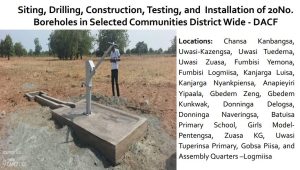
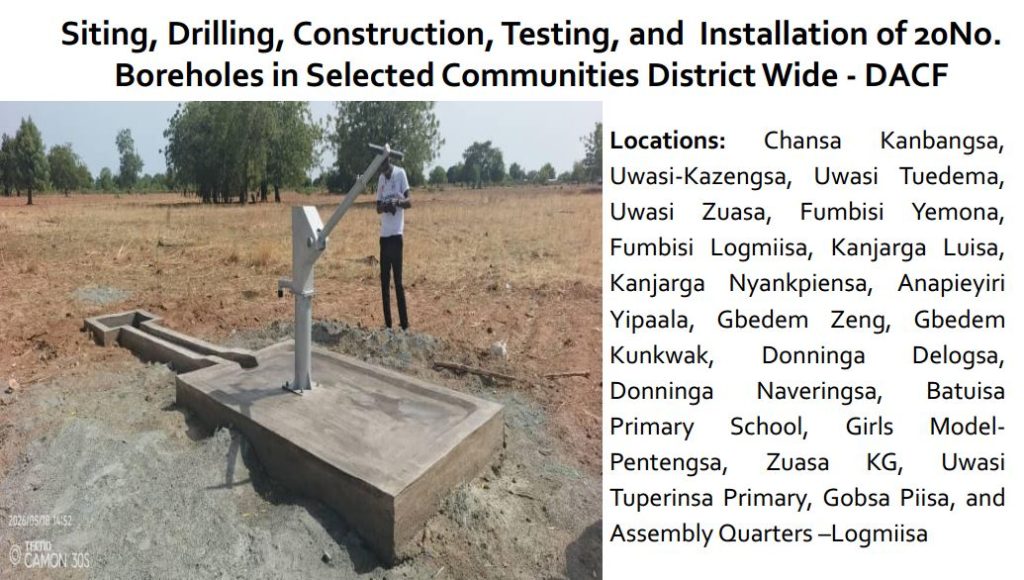
According to the slide, the project covers the sitting, drilling, construction, testing and installation of 20 boreholes in selected locations across Bulsa South, with funding identified as DACF.
The listed locations are Chansa, Kanbangsa, Uwasi-Kazengsa, Tuedema, Uwasi Zuasa, Fumbisi Yemona, Fumbisi Logmiisa, Kanjarga Luisa, Kanjarga Nyankpiensa, Anapieyiri Yipaala, Gbedem Zeng, Gbedem Kunkwak, Donninga Delogsa, Donninga Naveringsa, Batuisa Primary School, Girls Model-Pentengsa, Zuasa KG, Uwasi Tuperinsa Primary, Gobsa Piisa and the Assembly Quarters at Logmiisa.
The list appears to contain 20 entries when the paired place names are read as individual locations. However, the presentation does not provide a separate project schedule confirming the official name, community, site coordinates or facility details for each borehole.
A photograph displayed on the slide shows a hand-pump borehole installed on a concrete platform in an open field. While the image provides a visual example of a borehole facility, the slide does not establish the precise community where the photographed facility is located, its commissioning date, or whether it represents one of the 20 listed project sites.
How much did the 20-borehole project cost?
One of the most significant omissions is the absence of the project’s financial details.
The presentation identifies the District Assemblies Common Fund as the funding source but does not disclose the total contract sum, the cost allocated to each borehole, the amount paid to date, any outstanding balance or the date on which the contract was awarded.
Without these details, residents cannot determine the financial scale of the intervention or compare the reported expenditure with the number of boreholes delivered.
A fuller accountability report should disclose the total approved project cost, the funding allocation, payments made, outstanding commitments and any variations to the original contract sum. Where appropriate, it should also provide the cost breakdown for drilling, pump installation, concrete works, testing and other associated activities.
These details would help residents understand not only what the Assembly intended to deliver, but also how public funds were committed and used.
Who were the contractors, and when were the boreholes completed?
The slide does not identify the contractors responsible for the work. It also does not provide contract award dates, commencement dates, expected completion dates or information on the procurement process.
These are important details because a project description alone cannot establish whether the work was completed according to contract or whether the facilities were delivered within the agreed timeframe.
The Assembly could strengthen public confidence by publishing the names of the contractors, the relevant contract details, the implementation period and the current status of each borehole.
The presentation should distinguish between boreholes that have been completed and are operational, those that have been completed but are awaiting testing or commissioning, and those that remain under construction or have not yet commenced.
The absence of these details in the slide does not establish that the boreholes were not constructed or that funds were misused. It means the information presented is insufficient to independently verify the status and delivery of the project.
Where exactly are the boreholes located?
Although the slide names communities and institutions, it does not provide precise site information for each facility.
For example, references such as Fumbisi Yemona, Donninga Delogsa, Kanjarga Nyankpiensa and the Assembly Quarters at Logmiisa may help residents identify broad areas, but the slide does not show the exact settlement, landmark, school compound or geographical coordinates where each borehole is situated.
This matters because residents need to be able to identify the facilities, visit them and establish whether the completed infrastructure corresponds with the locations announced by the Assembly.
A location schedule containing the community, specific site, GPS coordinates, facility type and date of completion would make verification considerably easier. Photographs should also be captioned with the relevant community, installation date and project status.
Has the water supply been tested and made operational?
The project description includes testing and installation among the intended activities. However, the slide does not indicate whether each borehole has been tested, whether the water quality has been assessed, or whether the facilities are currently providing water to residents.
A borehole’s physical appearance alone does not demonstrate that it is functioning properly or supplying safe water.
A comprehensive report should therefore indicate the number of boreholes drilled, completed, tested, commissioned and operational. It should also state whether water-quality testing was conducted, whether the facilities have been handed over to beneficiary communities and what arrangements exist for maintenance and repairs.
These details are necessary to assess the practical benefits of the project beyond the construction of the visible infrastructure.
A public accountability presentation should go beyond listing projects
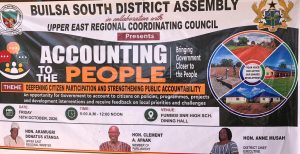
The purpose of an Accounting to the People forum is to help residents understand what public institutions have done, how public resources have been used and what results have been achieved.
For a project involving 20 boreholes, a list of locations is a useful starting point, but it does not provide a complete picture of implementation, expenditure or outcomes.
The Assembly could improve the presentation by including a consolidated table with the following information for every borehole:
- Location: Community, specific site and GPS coordinates.
- Funding: Funding source, approved budget and total contract sum.
- Contractor: Name of the contractor and relevant contract information.
- Timeline: Contract award, commencement and expected completion dates.
- Financial progress: Amount paid, outstanding balance and any approved variations.
- Physical progress: Whether the borehole is planned, ongoing, completed, tested or commissioned.
- Functionality: Whether the facility is operational and providing water.
- Verification: Dated photographs, inspection records and evidence of handover to the beneficiary community.
Providing these details would allow residents, civil society organisations and journalists to compare the Assembly’s commitments with the actual delivery of the project.
Questions for the Bulsa South District Assembly
To provide a clearer account of the 20-borehole DACF initiative, the Assembly should be asked to clarify the following:
- What is the total approved cost of the 20-borehole project, and how much has been paid to date?
- Which contractors were awarded the contracts, and when were the contracts awarded?
- What are the exact locations and GPS coordinates of all 20 boreholes?
- How many boreholes have been completed, tested, commissioned and confirmed operational?
- What are the commencement and completion dates for each facility?
- Were all 20 boreholes completed at the time of the accounting-to-the-people forum? If not, what is the status of each outstanding facility?
- Has water-quality testing been conducted, and are the results available?
- What arrangements have been made for maintenance, repairs and the long-term sustainability of the facilities?
Answers to these questions would help residents establish the extent of implementation and assess the benefits of the intervention.