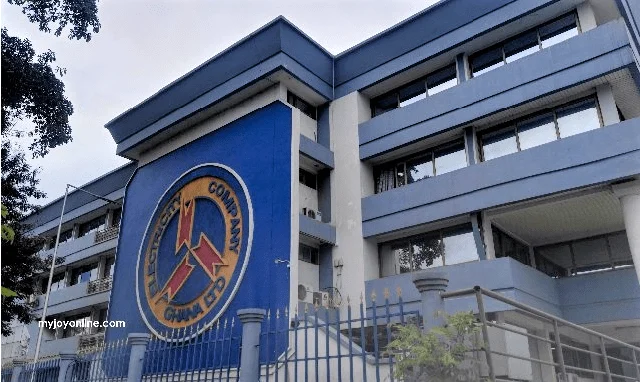
The Electricity Company of Ghana (ECG) has proposed a massive 224 percent increase in its Distribution Service Charge over the 2025–2030 tariff review period. The proposal was presented to the Public Utilities Regulatory Commission (PURC) during a stakeholder meeting on Monday, September 8, 2025, as part of efforts to ensure financial sustainability and improve service delivery.
If approved, the Distribution Service Charge will rise from 19.0875 pesewas per kilowatt-hour (kWh) to 61.8028 pesewas per kWh. According to ECG, the increment is driven by multiple economic and operational factors, including:
- Rising inflation
- Exchange rate volatility
- High interest rates
- Increasing operational and capital recovery costs
ECG’s Financial Projections and Revenue Requirements
ECG projects that its annual revenue requirements will average GHS 9.1 billion across the five-year period. The utility company highlighted that operational costs, human resource expenses, depreciation, capital recovery payments, and taxes will continue to rise, making a comprehensive tariff adjustment inevitable.
Key Proposals in ECG’s Tariff Structure Review
- Tariff Band Simplification: Reduction to two categories for residential customers and one for non-residential customers.
- Elimination of Cross-Subsidisation: Ensuring fair and non-discriminatory tariffs.
- Net Metering Tariff: For customers with grid-connected renewable energy systems, aligning with government renewable energy policies.
- Adoption of Bank of Ghana Exchange Rate: For tariff determination to mitigate forex risks.
- Service Charge Allocation: Exclusively for ECG to cover meter maintenance and replacement.
- Public Lighting Tariff: To address funding gaps for street lighting.
- Full Investment Cost Recovery: Covering both completed and ongoing infrastructure projects.
- Inclusion of Liquid Fuel Costs: During plant shutdowns, factored into the Weighted Average Cost of Fuel (WACOF).
- Reserve Margin Costs: Incorporating the full 18% reserve margin into tariffs.
- Automatic Tariff Adjustments: Moving from a quarterly to a monthly adjustment system.
Energy Procurement and Loss Reduction Targets
For 2025, ECG projects sourcing 22,784 GWh of energy from Independent Power Producers (IPPs) and the Volta River Authority (VRA), with 21,478 GWh expected after accounting for system losses. Losses, which stood at 27.68% in 2024, are projected to reduce gradually by 1% annually.
By 2029, ECG expects the bulk generation cost to rise from 253.78 GHp/kWh in 2025 to 302.73 GHp/kWh. With reserve margins included, costs are projected to increase further to between 313.02 GHp/kWh and 359.09 GHp/kWh.
What This Means for Consumers
If the proposed adjustments are approved, consumers are likely to face higher electricity bills, but ECG insists the reforms are necessary to restore financial stability, ensure reliable power supply, and support Ghana’s transition to renewable energy.