Fumbisi is changing, and anyone who has visited the town in recent years can hardly miss the signs of this transformation. New houses are springing up, businesses are emerging, roads and footpaths are being created, and more people are investing in property as the town assumes greater importance.
The development is understandable, particularly as Fumbisi continues to grow in population and economic activity and assumes an increasingly important administrative role.
However, while the physical expansion of the town may be a positive indication of progress, there is an issue that deserves urgent attention from the authorities, traditional leaders, landowners, developers and residents: Is Fumbisi’s rapid physical development being guided by a comprehensive town planning framework, or are individual developments taking place largely according to the decisions of individual landowners?
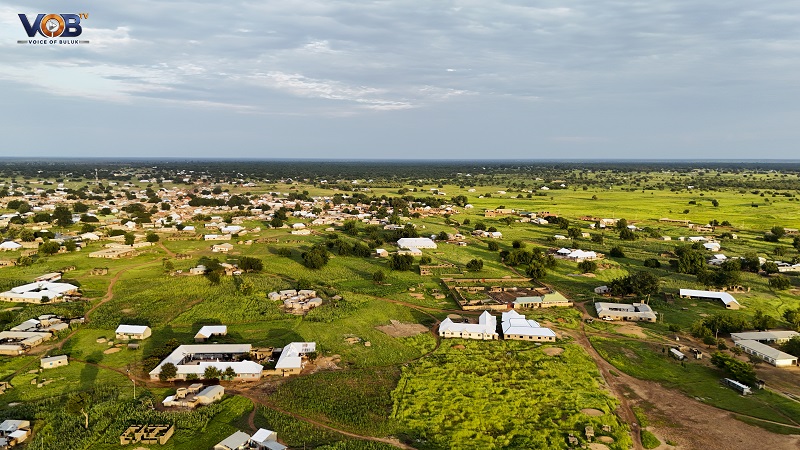
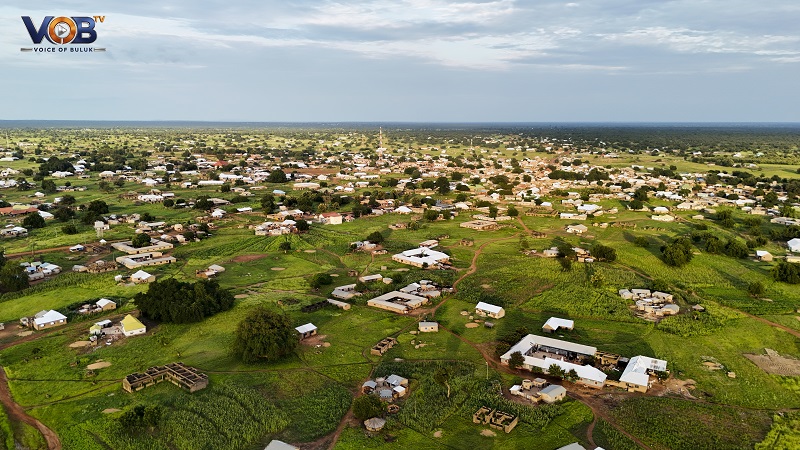
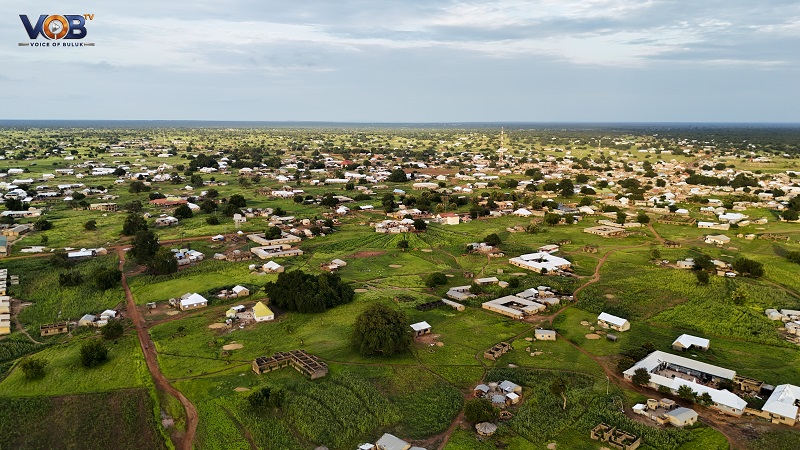
A recent drone view of Fumbisi provides an opportunity to ask this question. Viewed from the ground, it can be difficult to appreciate the overall pattern of development taking place in a town. From the air, however, the picture becomes much clearer. The drone photograph appears to show a town expanding across a wide area, with houses, roads, shops and other structures emerging in different directions and with what appears to be limited evidence of a clearly coordinated urban layout.
This should not necessarily be interpreted as evidence that there is absolutely no planning taking place in Fumbisi, because proper planning arrangements may exist that are not immediately visible from an aerial photograph. Nevertheless, the image raises a legitimate concern about whether the current pace and pattern of development are sufficiently aligned with the long-term planning needs of a growing district capital.
In my view, Fumbisi is at a critical stage in its development, and this is precisely the time when serious attention must be given to how the town will look and function in the next 10, 20 or 30 years. The town is still developing, which means there remains an opportunity to influence its future layout before the built environment becomes so dense and complicated that correcting mistakes becomes extremely expensive, politically difficult and socially disruptive.
Waiting until the town has become heavily congested before addressing planning challenges would be a mistake. Town planning works best when it is proactive rather than reactive; authorities should be thinking about where people will live, where businesses will operate, how roads will connect different parts of the town, where drainage channels will be located, where public institutions will be established and which areas should be protected from development long before those spaces become occupied.
The danger of allowing Fumbisi to develop without adequate coordination
The consequences of poorly coordinated development are not always immediately visible. A person building a house on a piece of land may see the project simply as an investment for their family. A developer opening a shop may see it as an opportunity to serve a growing population. A landowner may see the construction of houses on their property as a way of generating income.
Individually, each of these decisions may appear reasonable. The difficulty arises when hundreds or thousands of individual decisions are made without sufficient consideration of how they will interact with one another and with the wider structure of the town.
This is where town planning becomes important. Proper urban planning is not designed to prevent people from developing their land or to unnecessarily restrict economic activity. Its purpose is to ensure that individual developments contribute to a functional community rather than create problems for the entire population. A house, shop, school, health facility or road does not exist in isolation. Each one occupies space that may affect drainage, traffic movement, access to neighbouring properties, future road construction, emergency response and the location of other public infrastructure. When these relationships are not properly considered, problems can gradually accumulate until they become difficult to resolve.
One of the most serious potential consequences for Fumbisi is flooding. The town and surrounding areas have already experienced concerns about flooding and water movement, making drainage an issue that cannot simply be left to chance. When buildings are constructed without adequate consideration of natural waterways, drainage channels and the direction in which rainwater naturally flows, development can interfere with those water routes.
Open land that once absorbed or carried rainwater may gradually become covered by buildings, concrete surfaces and roads, increasing the volume and speed of runoff. If drainage infrastructure is not planned alongside this development, water can eventually accumulate around homes, businesses and roads, creating risks for property and public safety.
The problem is that once buildings have been established in locations that obstruct natural drainage or future road corridors, correcting the situation can be extremely difficult. Authorities may eventually be forced to spend substantial public funds constructing new drainage systems around existing buildings, widening roads through heavily built-up areas or addressing flooding that could have been prevented through better planning at an earlier stage.
In some situations, resolving such problems may require the relocation or demolition of structures, creating disputes between property owners and public authorities. It is therefore far more sensible to consider these issues before construction takes place rather than attempting to correct them after the town has already expanded.
Emergency services need a town that is easy to navigate
Another issue that deserves serious consideration is emergency access. As Fumbisi grows, the demand for fire, ambulance and other emergency services will inevitably increase. The effectiveness of these services does not depend only on having emergency vehicles and trained personnel; it also depends heavily on whether those vehicles can move quickly and safely through the town to reach people who need assistance.
Imagine a situation in which a fire breaks out in a densely developed area where roads are narrow, poorly connected or obstructed by buildings and other structures. Every minute matters in a fire emergency, and unnecessary delays caused by poor road access can have serious consequences. The same principle applies when an ambulance is transporting a critically ill patient or responding to an accident. A town with properly designed and interconnected roads provides emergency responders with multiple options for reaching different locations, while a poorly planned settlement can leave emergency services struggling to access certain areas.
This is why roads should not be viewed simply as pathways for today’s vehicles. They are part of the long-term infrastructure of a community and must be designed with future population growth, increasing vehicle ownership and emergency response requirements in mind. Fumbisi may not currently experience the level of traffic found in larger Ghanaian towns and cities, but that should not be an excuse to ignore future needs. The town is developing, and today’s relatively quiet roads could become tomorrow’s congested streets if there is no deliberate planning for expansion.
Fumbisi’s future traffic challenges should be considered now
The same concern applies to vehicular traffic. As the town’s population increases and economic activity expands, the number of vehicles, commercial transport operators, delivery vehicles, motorcycles and private cars will also increase. Areas that currently function adequately may become congested as more businesses, homes and public institutions are established.
Without a proper road network and designated areas for commercial activities, parking and loading, traffic congestion can gradually become a permanent feature of the town. This is particularly important around markets, schools, health facilities, government offices and other locations that attract large numbers of people. If commercial buildings and other structures are allowed to develop without considering road capacity and parking requirements, authorities may eventually face the difficult task of trying to reorganise areas that have already become densely occupied.
Planning for these challenges now does not mean trying to predict every detail of Fumbisi’s future. It simply means acknowledging that the town will continue to grow and making reasonable provisions for that growth. Roads can be designed with future expansion in mind; spaces can be reserved for public infrastructure; drainage corridors can be protected; and commercial and residential development can be guided in ways that reduce conflicts between different uses of land.
Landowners must also be part of the solution
While the responsibility for proper town planning rests significantly with the relevant authorities, landowners and developers must also recognise their role in shaping Fumbisi’s future. One of the concerns surrounding development in Fumbisi and the wider Buluk area is that some landowners put up buildings without sufficiently engaging the appropriate planning authorities before construction begins. In some cases, this may be because of a desire to develop quickly, while in others it may simply be because the landowner does not fully understand the importance of planning approval and professional guidance.
It is important, however, not to assume that every landowner deliberately disregards planning requirements. Some people may simply lack access to adequate information about town planning, building permits, zoning, drainage requirements, road reservations and other technical matters. A person who inherits or purchases land does not automatically become an expert in urban development. They may know the boundaries of their property but have little understanding of how their construction could affect roads, drainage, neighbouring properties or the future expansion of the town.
This is why education must form an important part of the solution. Rather than relying solely on enforcement after construction has already taken place, the relevant authorities should intensify public education among landowners, developers and prospective property owners. People need to understand that seeking professional advice before building is not simply another bureaucratic requirement; it is an important part of protecting their own investment and contributing to the orderly development of the community.
The District Assembly and planning authorities have a critical responsibility
The relevant authorities at the district level also have a major responsibility to ensure that residents understand the planning framework governing Fumbisi. If authorities expect landowners to comply with planning requirements, those requirements must be communicated clearly and consistently. Public education should not be limited to notices in offices that many residents may never see. There should be deliberate engagement with landowners, traditional leaders, developers, contractors, businesses and community members so that people understand where and how development should take place.
The authorities should also consider whether the existing planning framework is adequate for the pace at which Fumbisi is growing. If necessary, the town’s development plan should be reviewed and updated to reflect current realities and projected growth. Such a framework should provide clear guidance on residential areas, commercial zones, major roads, drainage systems, public institutions, recreational areas and spaces that should remain undeveloped because of environmental or public safety considerations.
Traditional authorities also have an important role because land administration and ownership arrangements are closely connected to development in many communities. Collaboration between traditional leaders, landowners and government planning authorities can help reduce situations where individuals make development decisions without understanding the wider implications for the town. A shared understanding of where Fumbisi should expand and how that expansion should occur would provide greater certainty for both landowners and developers.
The cost of fixing poor planning later will be much higher
One of the fundamental principles that should guide Fumbisi’s development is that it is cheaper and easier to plan correctly at the beginning than to correct mistakes later. Once a town becomes heavily built up, changing its layout becomes extremely complicated. A road that should have been constructed through an area may eventually require the removal of buildings. A drainage channel that was overlooked may have to be constructed around existing structures at considerable cost. A public institution may find itself without enough land for expansion. A market may become surrounded by buildings with inadequate space for parking, loading and pedestrian movement.
These are not merely technical problems. They can become social and political problems because people naturally become attached to their properties and investments. Asking someone to move a building because a road was poorly planned years earlier can create disputes that could have been avoided if the road corridor had been protected from the beginning.
This is why the current stage of Fumbisi’s development should be treated as an opportunity rather than a problem. The town has not yet reached the level of physical congestion seen in many older urban centres. There is still room to make deliberate decisions about its future structure, but that opportunity will become smaller as construction continues.
The time to act is now
Fumbisi’s development should be welcomed, but development should not be measured simply by the number of new buildings appearing across the landscape. The quality, organisation and sustainability of that development matter just as much. A town can grow rapidly and still struggle with congestion, flooding, poor accessibility and inadequate infrastructure if its physical expansion is not properly managed.
For that reason, I believe the current stage of Fumbisi’s development presents an important opportunity for the authorities, traditional leaders, landowners, developers and residents to have a serious conversation about the town’s future. The relevant planning authorities should intensify education, strengthen engagement with landowners, ensure that development follows approved plans and consider the long-term infrastructure needs of the growing town. Landowners and developers, for their part, should seek professional planning guidance before commencing construction and recognise that their individual decisions contribute to the shape of the entire community.
Fumbisi does not need to wait until it becomes overcrowded before taking town planning seriously. It does not need to wait for severe flooding, persistent traffic congestion or an emergency-access crisis before recognising the importance of proper planning. The town is still growing, and that is precisely why the time to plan is now.
The aerial view of Fumbisi should therefore serve not only as a beautiful picture of a developing town, but also as an invitation to think about the future. The decisions being made today will determine whether Fumbisi develops into a well-organised and resilient district capital or whether future generations will inherit the difficult and expensive task of correcting problems created by today’s uncoordinated development.
Fumbisi is growing. The responsibility now is to ensure that it grows with direction, foresight and a clear vision for the future.
Opinion by: Akunye Michael