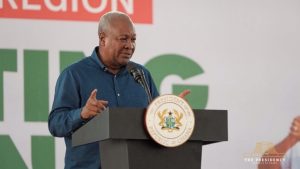
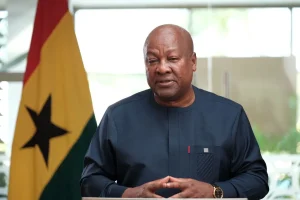
President John Dramani Mahama has reiterated that the construction of Ghana’s National Cathedral should not be financed with state funds, signalling that the controversial project must find alternative sources of funding if it is to continue.
The President’s position comes amid renewed public debate over the future of the National Cathedral, a project that has attracted significant political, religious and financial controversy since its inception.
President Mahama has indicated that the government does not intend to continue committing public funds to the project, particularly in the wake of concerns surrounding the expenditure of state resources on the unfinished structure.
According to President Mahama, if the National Cathedral is to be completed, its financing should come from sources other than Ghana’s public purse.
The position effectively places the responsibility for raising the necessary funds on the religious community, private individuals, philanthropists and other non-state contributors who support the project.
The President’s comments are significant because the National Cathedral was originally presented as a major national religious and cultural project that would be supported through a combination of public and private contributions.
However, the project has faced mounting criticism over the amount of public money committed to it and questions surrounding its management.
National Cathedral controversy
The National Cathedral project was initiated under the administration of former President Nana Addo Dankwa Akufo-Addo, who described the facility as a national Christian monument intended to serve Ghana and the wider Christian community.
The project was also expected to include a Bible Museum and other facilities and was promoted as a major landmark for Ghana.
Its construction, however, became increasingly controversial as questions emerged over funding, contracts, expenditure and the use of state resources.
A government-commissioned audit by Deloitte and Touche subsequently raised serious concerns about the project’s financial management. The audit examined payments and contractual arrangements associated with the project and became a major part of the national discussion about whether public funds had been properly managed.
Mahama administration reviews the project
The National Cathedral has remained one of the projects inherited by the Mahama administration, creating a difficult policy question for the government: whether to continue with construction, abandon the project or find a different financing model.
President Mahama’s latest position points towards a funding arrangement that does not place the financial burden on the state.
That approach would represent a significant departure from the previous administration’s model, under which public resources were used alongside fundraising efforts to support the project.
For the government, the issue is particularly important because of competing demands on public finances and the need to direct limited state resources towards essential services and development priorities.
What happens to the National Cathedral now?
The President’s comments leave open the question of how the project will be financed and whether sufficient private and religious contributions can be mobilised to complete it.
The future of the National Cathedral is also likely to remain a subject of public discussion because of the substantial expenditure already associated with the project.
For now, however, President Mahama has made his position clear: the completion of the National Cathedral should not become a continuing burden on Ghana’s public finances.
The debate over the project is therefore shifting from whether the state should continue funding it to whether supporters of the National Cathedral can mobilise enough non-state resources to bring the long-delayed project to completion.
As the Mahama administration continues to review inherited projects and public expenditure, the National Cathedral is likely to remain an important test of the government’s approach to fiscal discipline, accountability and the use of state resources.