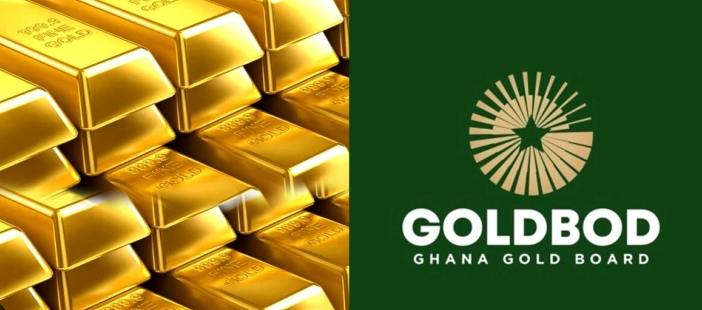
Ghana’s gold industry is experiencing an unprecedented surge, with new data from the Bank of Ghana revealing a historic boom in exports.
In the first half of 2025, gold exports reached an astounding $8.3 billion, nearly doubling the figure from the same period in 2024. This marks the highest half-year total for gold exports since at least 2016, firmly cementing gold’s dominance in Ghana’s trade landscape.
Between January and June 2025, gold alone accounted for 64% of Ghana’s total exports, which stood at $13 billion. This significant contribution underscores the precious metal’s vital role in the nation’s economy.
Global Factors Fueling Ghana’s Gold Windfall
The remarkable rally in Ghana’s gold exports is largely attributed to favorable global market conditions. Gold prices have remained elevated throughout the year, currently hovering around $3,290 per ounce. While slightly below the April peak of $3,500, this figure is substantially higher than the 2024 average of $2,300.
Several international factors are driving this sustained demand. Global uncertainty, particularly following Donald Trump’s return to the White House in January, has pushed investors towards safe-haven assets like gold. Concerns over potential erratic trade and fiscal policies are prompting a flight to security. Additionally, central banks worldwide are actively increasing their gold reserves, further boosting demand. By the end of 2024, gold had even surpassed the euro to become the second-largest reserve asset globally, according to the European Union.
This surging global appetite is proving immensely beneficial for Ghana, which stands as Africa’s largest gold producer. In 2024, Ghana mined 4.8 million ounces of gold, a significant 19% increase from 4 million ounces in 2023. These gold volumes alone generated $11.6 billion in export earnings last year. If current trends persist, Ghana is on track to achieve over $16 billion in gold exports by the end of 2025.
Small-Scale Mining Driving Production Growth
Behind these record-breaking figures lies a notable structural shift within Ghana’s gold mining sector. Small-scale miners are increasingly contributing to the nation’s overall gold output. In 2023, their share of total gold production stood at 27%; by 2024, this had jumped to an impressive 39%.
Data from the Finance Ministry highlights this trend: the Ghana Gold Board (formerly the PMMC) purchased $5 billion worth of gold from small-scale miners in just the first half of 2025. At an average price of $3,200 per ounce, this translates to roughly 1.5 million ounces. To put this in perspective, small-scale miners produced 1.8 million ounces in all of 2024.
While these figures suggest a sharp increase in production, they also raise important questions regarding the source of this additional gold. It’s plausible that previously smuggled gold is now being captured in official statistics, or that unregulated “galamsey” (illegal mining) gold is being laundered into the official system. The truth is likely a combination of these factors. However, the current lack of a robust gold tracing system by the Gold Board leaves the door open to potential abuse.
Gold Exports Outpace Imports: A Boost for the Cedi
A significant milestone has been achieved in the first half of 2025: Ghana’s gold exports ($8.3 billion) have remarkably exceeded the country’s total imports ($8.2 billion) for the same period. This marks the first time since at least 2016 that gold exports alone have surpassed imports, indicating a strengthened trade balance.
Furthermore, the destination of these earnings is crucial. Since the Ghana Gold Board is mandated to surrender its foreign exchange earnings to the Bank of Ghana, the entire $5 billion from its purchases directly benefits the central bank. This substantial inflow of foreign currency is a major contributing factor to the cedi’s strength observed throughout the year.
Capitalizing on the Gold Windfall: Risks and Opportunities
Despite the positive outlook, Ghana’s gold industry faces inherent risks. The continued export of raw gold leaves the economy vulnerable to volatility in international prices. While reports suggest the central bank is developing a hedging strategy, more comprehensive measures are needed.
Chief among these is the establishment of a modern gold refinery within Ghana and the strict enforcement of traceability mechanisms across the entire gold supply chain. This unprecedented gold windfall presents a rare and powerful opportunity. It can be strategically leveraged to further strengthen the Ghanaian cedi, create sustainable jobs through value addition, and build long-term economic resilience. However, achieving this will require a decisive shift away from simply exporting unrefined gold ore.
Crucially, this economic growth must be pursued with environmental responsibility and proper oversight. There is no justification for economic gains at the cost of destroying vital forests and polluting precious rivers.
Ghana is currently riding a wave of gold prosperity. The critical question now is how the nation will strategically utilize these gains to secure a truly prosperous and sustainable future.