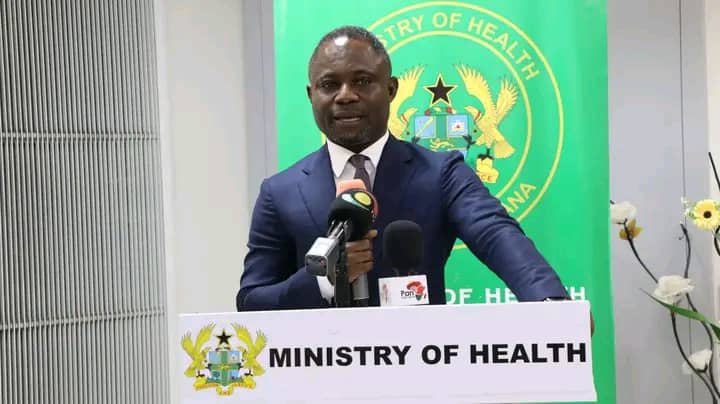
The Government of Ghana has successfully averted a looming strike in the nation’s healthcare sector after securing clearance to migrate hundreds of unpaid junior doctors onto the public payroll, the Minister of Health, Kwabena Mintah Akandoh, announced today.
This critical intervention follows months of salary arrears that left many newly recruited doctors working without pay, a situation that had sparked strike threats from the Junior Doctors’ Association (JDA).
Government Acts to Prevent Health Sector Disruption
Addressing the press in Accra on October 13, 2025, Health Minister Kwabena Mintah Akandoh confirmed that the Ministry of Health, in collaboration with the Ministry of Finance, had expedited the clearance process to ensure that affected junior doctors were finally placed on the national payroll.
“You recently heard some junior doctors threatening to go on strike,” Akandoh said. “They had started work without clearance, without salaries, without pay. No young professional should have to endure such conditions, especially those critical to healthcare delivery.”
He added,
“We collaborated with the Ministry of Finance, and as I speak to you now, we have succeeded in getting them clearance, and they are being migrated onto the payroll.”
The JDA had earlier revealed that over 200 junior doctors were owed 10 to 14 months of unpaid salaries, a recurring problem often blamed on bureaucratic delays in the financial clearance process.
Addressing Ghana’s Health Workforce Challenges
The migration of junior doctors onto the payroll comes at a crucial time when Ghana’s healthcare sector is grappling with a growing “brain drain”, the mass exodus of trained medical professionals to countries such as the United Kingdom and the United States.
Experts have long warned that salary delays and poor working conditions are major contributors to the trend, threatening Ghana’s ability to achieve Universal Health Coverage (UHC) by 2030.
Recent studies in 2025 have shown that a high percentage of young healthcare professionals express intentions to emigrate if their working and living conditions do not improve.
The timely resolution of the junior doctors’ salary arrears is therefore expected to reduce discontent among medical staff and stabilize essential health services, especially in teaching and regional hospitals, where junior doctors form the backbone of patient care.
A Strong Commitment to Health Sector Stability
Minister Akandoh described the move as a clear demonstration of government’s commitment to improving the welfare of healthcare workers and ensuring stability within the health system.
“This move is a strong affirmation of the government’s commitment not only to their service conditions but to the broader stability of our health sector,” he noted.
He further appealed to the affected doctors to remain dedicated to their duties, assuring them that their financial concerns are being addressed and that similar issues will be prevented in the future through improved administrative coordination.
Looking Ahead
The successful payroll migration marks a significant relief for the nation’s junior doctors and is widely viewed as a positive step toward restoring confidence in Ghana’s health sector management.
Observers say consistent reforms in recruitment, payroll processing, and financial clearance systems will be essential to sustaining morale among health workers and curbing further human resource losses due to migration.