
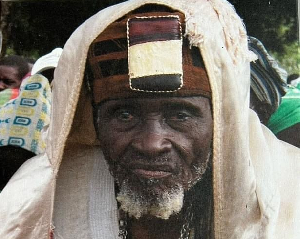
In the rich tapestry of Ghana’s traditional leadership, few figures are as revered and cherished as Nab Dr. Ayieta Azantilow I, the longest-reigning Paramount Chief of the Bulsa Traditional Area. His remarkable journey, from humble beginnings to becoming a transformational leader, continues to inspire generations of the Bulsa people and beyond.
A Shepherd Boy Who Became a Leader
Born around 1900 in Sandema to Nab Ayieta Apoteba and Madam Awusima Adaam of Siniensi-Chansa, Ayieta Azantilow started life as a shepherd and later worked as a farmer in his youth. These early experiences shaped his deep connection with his people and the land.
In December 1931, he succeeded his elder brother, Nab Agaasa Ayieta, to become Sandem-Naab and Paramount Chief of the Builsa State — a role he would hold with distinction for nearly 75 years until his peaceful passing on 14 November 2006. His reign was one of remarkable longevity, steadfast leadership, and unwavering commitment to community development, making him one of Ghana’s most celebrated traditional rulers.
Champion of Education and Social Progress
Long before formal development plans reached the remote northern communities, Nab Dr. Ayieta Azantilow understood the power of education. In 1935, he mobilized his people to build the first Native Authority Primary Boarding School in Sandema, which opened in 1936, even contributing personally to its completion rather than accept colonial loans. He later supported the establishment of schools in Siniensi, Fumbisi, and Chuchuliga, all constructed through communal effort.
His commitment didn’t stop at primary education. He championed the creation of the first Middle Boarding School in 1952 and played a pivotal role in the founding of the Sandema Secondary Technical School in 1976. He also led his people in building a dispensary in Sandema in 1937, expanding access to essential healthcare.
A Leader on the National and Global Stage
Nab Dr. Ayieta Azantilow was not just a local chief, his influence reached national and international arenas. During World War II, the British colonial authorities relied on him to rally soldiers from his community. In 1942, he was invited by the Governor of the then Gold Coast to address troops in Kumasi before they were deployed to battlefields in Abyssinia and Burma, and again addressed the West African Regiment in Accra in 1945.
In 1953, he made history by representing the Gold Coast at the Coronation of Queen Elizabeth II in London, becoming one of the few African traditional leaders invited to such a global event. He maintained friendly ties with the British Royal Family throughout his life.
Peacemaker, Advocate, and Statesman
Beyond education and international recognition, Nab Dr. Azantilow was a committed peacemaker and advocate for social justice. His tenure saw the Upper Region House of Chiefs go through a period (1966–1972) without a single chieftaincy dispute, a testament to his diplomatic skills and moral authority. He also supported progressive practices in marriage and human dignity, encouraging women’s voices in family matters.
He served in several high-profile traditional leadership roles, including President of the Builsa Traditional Council, Vice-President of the Northern Territorial Council, and Chairman of the Upper Region Agricultural Council, always placing community wellbeing at the forefront.
Honours and Legacy
Nab Dr. Ayieta Azantilow received numerous honours that reflect his impact at home and abroad. These include medals from British monarchs, such as those of King George V and Queen Elizabeth II — national awards like the Grand Medal of Ghana and the Order of the Star of Volta, and an Honorary Doctor of Letters from the University for Development Studies in 2005 in recognition of his visionary leadership.
He was also celebrated for promoting environmental conservation, community tourism, and infrastructural development, with many of his initiatives still benefiting the Builsa communities today.
Forever Remembered
Nab Dr. Ayieta Azantilow passed away peacefully at an advanced age, leaving behind a vast family and a legacy that stretches across decades of progressive leadership. To the Bulsa people, he remains more than a chief, he is a symbol of enduring wisdom, unity, and service.
As the people of the Upper East Region continue to build on his work, his life stands as a shining example of how tradition and progress can walk hand in hand, a legacy forever etched in the heart of Buluk.
Reference
Buluk Research Centre. (n.d.). Biography of Nab Dr. Ayieta Azantilow I, paramount chief of Buluk. Buluk. https://www.buluk.de/Buluk6/Azantilow_Bio.htm







Thank you 😊