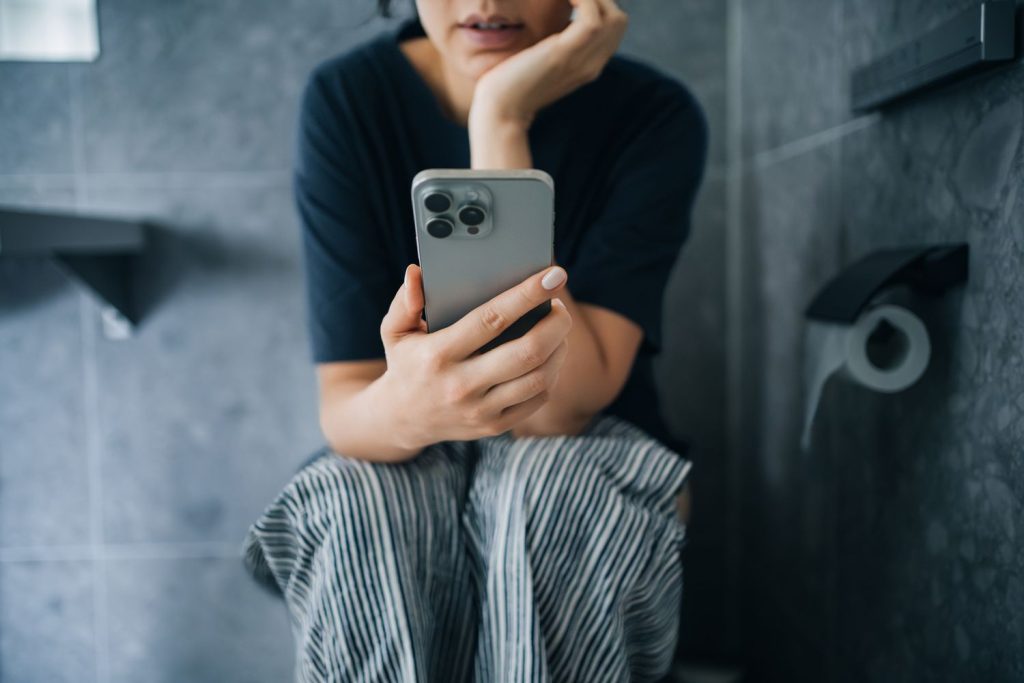
A new medical study has revealed that using smartphones while sitting on the toilet bowl (WC) may increase the risk of developing haemorrhoids (piles) by as much as 46 per cent.
The research, published in the PLOS ONE Journal (Read full study here), found that prolonged sitting on the toilet increases pressure on the veins surrounding the anus. This pressure causes the veins to swell, leading to painful and itchy haemorrhoids, one of the most common anorectal disorders worldwide.
Smartphones and Toilet Habits
The study further revealed that people who use their phones in the bathroom tend to spend significantly more time on the toilet than those who do not. Many respondents admitted to scrolling through social media, reading news, or watching videos while relieving themselves.
One respondent told reporters that he spends up to two hours in the toilet daily because it’s his “quiet place” to browse social media.
Another university student explained that he takes his phone to the washroom to prevent it from being stolen, while others said they simply didn’t want to miss important calls.
However, not everyone engages in this behavior. A Muslim woman interviewed said her religion forbids speaking in the toilet, so she avoids taking her phone there altogether.
Medical Experts Confirm the Health Risks
In an interview, Dr. Henry Nii Odai Annang, a senior medical officer at Breeze International Clinic, confirmed that sitting on the toilet for long periods exerts unnecessary pressure on the veins around the anal region, which increases the risk of piles.
“Sometimes, patients report persistent symptoms, and after investigation, we discover that in addition to poor dietary habits, they spend long hours on the toilet using their phones,” Dr. Annang explained.
He also cautioned that the toilet environment is full of bacteria, meaning that using a phone in the bathroom exposes users to potential infections from toilet surfaces.
Dr. Annang added that severe haemorrhoids, classified as stage four, often require surgery, and even then, “the affected area may never fully return to its original state.”
To reduce the risk, he advised the public to spend no more than 10 minutes on the toilet and to eat a high-fibre diet rich in fruits and vegetables.
Traditional Viewpoints on the Cause of Piles
From a traditional medicine perspective, Dr. Adu Gyamfi, Chief Executive Officer of Medimafo Herbal Clinic, disagreed with the study’s direct link between smartphone use and piles.
While he acknowledged that phones can carry germs, Dr. Gyamfi said scrolling on a phone does not directly cause haemorrhoids.
“There are people who use public toilets without phones and still develop piles,” he stated.
Dr. Gyamfi, whose clinic sees 40 to 45 per cent of patients presenting with piles, attributed the condition mainly to poor detoxification and accumulated waste.
He urged Ghanaians to eat balanced local meals, particularly those rich in greens and fruits, and to detoxify their systems regularly using herbs or natural medicines.
Key Takeaway
Both conventional and traditional medical experts agree on one thing: healthy eating habits, hygiene, and reduced time on the toilet are essential in preventing haemorrhoids.
As smartphone dependency continues to rise globally, medical professionals warn that using the toilet as a phone lounge could be doing more harm than most people realize.