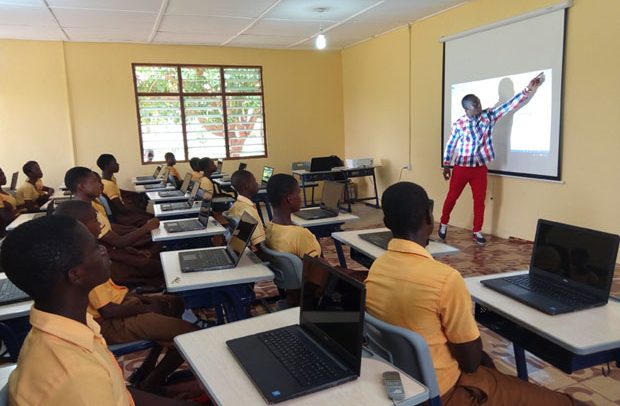
In an increasingly interconnected world, Information and Communication Technology (ICT) education is no longer a luxury, but a fundamental necessity.
It’s the bedrock for future success, yet a recent visit by a Voice of Buluk team to schools in Builsa South and North has uncovered a concerning reality: ICT education in Buluk is critically underserved, creating a stark digital divide that threatens the potential of our youth.
Our investigations, spanning institutions like Fumbisi Senior High School, SS Peter and Paul Basic School, and Fumbisi Preparatory School, revealed a consistent and disheartening pattern: a severe lack of functional ICT labs. While Fumbisi Senior High School does possess an ICT lab, it is woefully underequipped, rendering it largely ineffective for practical learning.
The situation in basic schools is even more dire. Many headmasters confirmed a critical shortage of trained ICT teachers, forcing them to rely on the goodwill of volunteers to impart essential digital skills. This reliance on sporadic and often untrained support means that the quality and consistency of ICT instruction are severely compromised.
The Gravity of the Situation: A Tale of Two Realities
Consider the profound implications of this disparity. In urban centers like Accra, students in well-resourced schools benefit from state-of-the-art ICT labs, equipped with modern computers, reliable internet access, and dedicated, professionally trained ICT educators.
These students engage in hands-on learning, developing crucial digital literacy, problem-solving skills, and a foundational understanding of the technological world. They are prepared for a future where digital fluency is paramount.
Now, imagine the students in Buluk. Many of them will sit for their Basic Education Certificate Examination (BECE) – an exam that includes an ICT component – having never touched a computer, let alone experienced a functional ICT lab.
How can we expect them to compete on an equal footing when their access to essential learning tools is virtually non-existent? This creates an unfair disadvantage, widening the gap between rural and urban opportunities.
Why ICT Education Matters More Than Ever
In today’s global landscape, ICT skills are essential for:
- Academic Success: From research to online learning resources, ICT enhances the educational experience across all subjects.
- Employability: The modern workforce demands digital literacy. Without it, our youth will be left behind in the job market.
- Critical Thinking and Innovation: Engaging with technology fosters problem-solving, creativity, and critical thinking.
- Bridging the Knowledge Gap: ICT provides access to a world of information, empowering individuals and communities.
- Community Development: Digital skills can be leveraged for local economic growth, improved healthcare access, and enhanced communication.
Call to Action: Investing in Buluk’s Future
The findings from our visit underscore an urgent need for concerted effort from all stakeholders. We call upon:
- Government and Educational Authorities: To prioritize the provision of fully equipped ICT labs in all schools within Buluk, including the provision of reliable electricity and internet connectivity.
- Ministry of Education and Ghana Education Service: To implement targeted programs for training and deploying qualified ICT teachers to rural areas, ensuring sustainable and effective instruction.
- NGOs and Philanthropic Organizations: To partner with local communities and schools in Buluk to support the development of ICT infrastructure and resources.
- Community Leaders and Parents: To advocate for improved ICT education and support initiatives aimed at bridging the digital divide.
The future of Buluk’s youth, and indeed the region’s socio-economic development, hinges on equitable access to quality ICT education.
Let us work together to ensure that every child in Buluk has the opportunity to thrive in the digital age, transforming challenges into opportunities for growth and progress.