
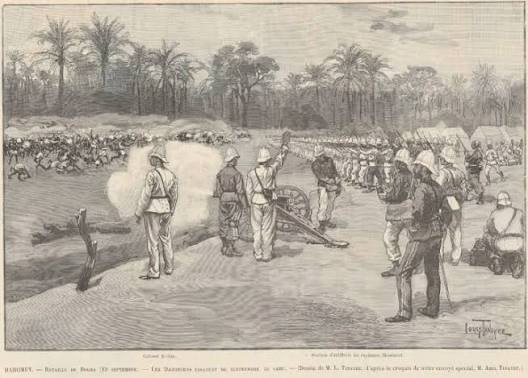
When the history of Buluk is discussed today, much of the attention naturally gravitates toward Sandema, the traditional capital of the Builsa people and the home of the famous Feok Festival. Yet long before Sandema emerged as the political and administrative centre of the area, another settlement occupied a position of remarkable influence. That settlement was Bachonsa, a community whose significance has gradually faded from public memory despite the pivotal role it played during one of the most transformative periods in the history of the Builsa people.
Historical records suggest that Bachonsa was the first Builsa community encountered by Europeans at the close of the nineteenth century. It was here that British colonial officers first sought to establish relations with the people of Buluk, hoping to secure allies in a rapidly changing political landscape shaped by slave raids, inter-ethnic conflicts, and the growing rivalry between Britain and France for control of the territories that would eventually become northern Ghana. Far from being an ordinary village, Bachonsa stood at the crossroads of local resistance and imperial ambition, making it one of the most historically significant communities in Buluk’s past.
A Land That Remained Beyond European Reach
Unlike the coastal regions of the Gold Coast, where European merchants, missionaries, and colonial administrators had maintained a presence for centuries, the Builsa area remained largely untouched by direct European influence for much of the nineteenth century. European expeditions tended to follow established commercial routes connecting major trading centres such as Kumasi, Salaga, Wa and Tamale, leaving Buluk outside the regular paths of exploration and commerce.
This geographical isolation allowed the Builsa people to preserve much of their political independence and cultural identity. However, it did not shield them from danger. Throughout the nineteenth century, communities across Buluk faced repeated attacks from slave raiders, particularly the feared Zabarima warriors led by Babatu, whose campaigns devastated many settlements across northern Ghana and neighbouring territories. The struggle against these raids became one of the defining experiences of the Builsa people, forging a reputation for courage and resilience that continues to be celebrated today.
Why the British Turned Their Attention to Buluk
By the 1890s, the political landscape of West Africa was changing rapidly. European colonial powers were engaged in what historians now describe as the “Scramble for Africa,” competing to extend their influence over territories that had previously remained outside formal colonial control. Northern Ghana became increasingly important, not because of its wealth alone, but because it occupied a strategic position between British territories to the south and expanding French influence from present-day Burkina Faso.
Against this backdrop, the British government dispatched an expedition under Major Henderson, accompanied by the experienced colonial official and explorer George Ekem Ferguson, in late 1896. Their mission was multifaceted. They sought to strengthen British influence in the region, gather intelligence on local political conditions, limit French expansion, and address the growing instability created by slave raiders such as Babatu and Samori.
For Henderson, success depended not simply on military strength but on diplomacy. Establishing relationships with influential local leaders would determine whether Britain could gain a foothold in Buluk.
Why Bachonsa Became the Gateway to European Contact
The first destination chosen by Henderson’s expedition was not Sandema but Bachonsa. Historical accounts indicate that, at the time, Bachonsa was among the most influential settlements in the Builsa area, enjoying considerable political importance that exceeded its present-day status. Its prominence was largely tied to one extraordinary individual whose influence extended well beyond the boundaries of Buluk.
That individual was Ameria, also referred to in historical documents as Hameria or Amarea. Ameria had earned widespread recognition after leading a successful revolt against Babatu’s Zabarima officers, an act that elevated him to prominence throughout the Gurunsi-speaking regions. Some historical accounts even describe him as the “King of the Gurunsi,” reflecting the respect and authority he commanded among neighbouring communities.
For the British, Ameria represented far more than a local chief. He appeared to be a potential ally capable of helping Britain counter both the slave raiders who terrorised the region and the growing influence of French colonial authorities advancing from the north. Henderson therefore made Bachonsa his first destination, believing that an alliance with Ameria could fundamentally shape Britain’s future presence in northern Ghana.
A Diplomatic Turning Point
The meeting at Bachonsa, however, did not unfold as the British had anticipated.
Before Henderson’s arrival, Ameria had already opened discussions with French officials based in Ouagadougou. The French had reportedly promised military assistance against Babatu, whose forces remained a constant threat to communities across the region. Faced with competing European powers, Ameria chose caution over commitment.
Rather than aligning himself with the British expedition, he declined Henderson’s overtures, unwilling to jeopardise the understanding he had already reached with the French. His decision reflected the remarkable political awareness displayed by many African leaders during this era. Contrary to older colonial narratives that portrayed local rulers as passive participants in European expansion, Ameria demonstrated that African leaders actively weighed competing interests, negotiated with rival powers, and made strategic decisions based on what they believed best served their people.
From Bachonsa to Kanjaga
Denied the alliance he had hoped to secure, Henderson redirected his expedition toward Kanjaga, where Babatu had established one of his operational bases. There, the British officer met the notorious slave raider in an encounter that illustrated the complex political realities of northern Ghana during the final years of the nineteenth century.
The British viewed Babatu as both a destabilising force and an obstacle to their colonial ambitions. Babatu, however, remained determined to preserve his military influence and suppress communities that had resisted his authority. Their meeting underscored the competing interests that defined the region at the time. A struggle involving African resistance movements, slave-raiding empires, and rival European colonial powers seeking to shape the future of West Africa.
The Legacy of Bachonsa
Although Bachonsa would gradually lose its prominence as political authority and commercial activity shifted toward Sandema and other emerging settlements during the colonial period, its historical significance remains undeniable. It was the community through which Europeans first entered Buluk. It was home to one of the most influential political leaders of the era. And it became the setting for diplomatic negotiations that reflected the broader contest for power unfolding across West Africa.
Today, many discussions about the history of Buluk understandably focus on Sandema, the Sandem-Nab, and the Feok Festival. These are essential chapters of the Builsa story. Yet the history of Bachonsa deserves equal recognition, for it reminds us that the foundations of modern Buluk were shaped not only by celebrated battles but also by diplomacy, strategic leadership, and communities whose influence has faded from public memory with the passage of time.
Remembering a Forgotten Chapter of Buluk’s History
The story of the first Europeans in Buluk is, at its heart, not simply a story about colonial exploration. It is a story about the agency of the Builsa people and the choices made by their leaders during one of the most turbulent periods in West African history. Bachonsa was not merely the first stop for a British expedition; it was the political gateway to Buluk, the home of a leader whose influence reached far beyond his own community, and the setting for decisions that shaped the trajectory of colonial engagement in the region.
As Buluk continues to celebrate its rich cultural heritage and preserve the memory of its heroes, the history of Bachonsa deserves renewed attention. By revisiting these overlooked narratives, present and future generations can gain a deeper appreciation of the resilience, diplomacy and leadership that have long defined the Builsa people. Recognising Bachonsa’s place in history does not diminish the importance of other communities; rather, it enriches the collective story of Buluk and ensures that one of its most remarkable chapters is no longer forgotten.
This article draws on the historical research of German anthropologist Franz Kröger, whose decades of fieldwork among the Builsa people have provided some of the most comprehensive written accounts of Buluk’s history, particularly his work “The First Europeans in the Bulsa Area.”
The article was put together by Akunye Michael.
Source: Kröger, Franz. “The First Europeans in the Bulsa Area.” BULUK – Journal of Bulsa Culture and Society. Available at: Buluk.de – The First Europeans in the Bulsa Area






Thank you for this piece. An untold story that has now been released to many Builsas, I believe. Let’s enrich our cultural heritage and shape it to have a unified one. The perpetrators of repatriation and the call for reparative justice is not yielding the desired results because they believe Africans rely on uncoordinated history and lacks cohesion and merit. Let’s coordinate and have a unified history. If for nothing at all but for our future generations. Thank you