In the heart of Northern Ghana lies Buluk (Bulsa land), a society where culture, tradition, and survival are deeply intertwined. At the center of this social fabric stands the Bulsa woman, a symbol of resilience, industry, and cultural continuity.
Far beyond the common perception of motherhood and household care, the Bulsa woman is a farmer, food processor, craftswoman, trader, and cultural custodian whose daily labour sustains families and preserves centuries-old traditions.
To understand Bulsa society is to understand the role of its women.
The Bulsa Woman: The Pillar of the Household
Traditionally, a Bulsa woman is first recognized as a mother and caretaker, responsible for feeding and nurturing her family. Yet her responsibilities go far beyond domestic duties. She is the central figure in food production and preparation, particularly in the processing of millet, the staple grain that forms the foundation of the Bulsa diet.
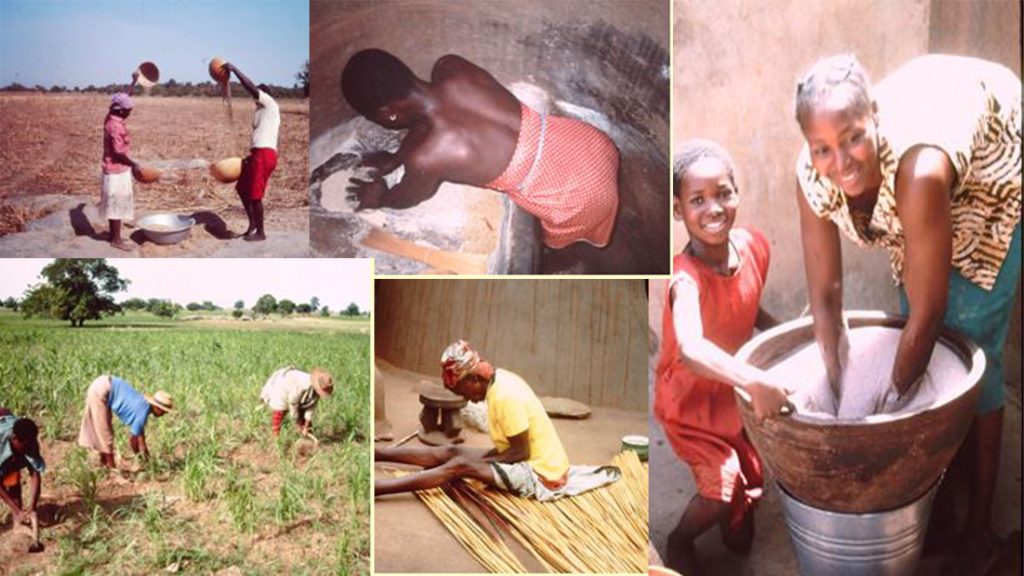
Most women living in traditional compounds dedicate a significant portion of their daily lives to processing millet into TZ (tuo zaafi), the staple dish eaten with soup in Bulsa households.
From pounding grains in mortars to grinding them into flour and cooking meals for the household, the Bulsa woman performs labor-intensive work that ensures food security for her family.
Agriculture and the Symbolism of Fertility
Although agriculture in Buluk is largely a family effort, the Bulsa woman occupies a unique spiritual and practical role in farming. In millet cultivation, men typically prepare the soil and make holes in the field, and the women plant the seeds.
This act is deeply symbolic. Women are associated with fertility and life, and just as they give birth to children, they are believed to bring life to the seeds placed in the soil.
In recent years, many husbands have begun allocating small plots of land to their wives, allowing them to grow millet and other crops for family consumption and personal income.
Food Processing: Labour, Songs and Survival
One of the most exhausting traditional activities of a Bulsa woman is grinding millet, often done inside a small clay grinding room. The work is physically demanding and usually done alone in a confined space.
To cope with the strain, women often sing loudly while grinding. These songs, sometimes humorous, sometimes critical of men or society, serve as a form of emotional release and cultural expression.
Through these songs, the Bulsa woman transforms hardship into art, demonstrating remarkable psychological resilience.
Producers of Essential Foods and Spices
Beyond preparing meals, Bulsa women produce many of the essential ingredients used in traditional cooking.
Dawa-dawa (Local Spice)
Women collect seeds from the dawa-dawa tree and process them through boiling, pounding, fermentation, and drying to form spice balls used in nearly all soups.
Often referred to as “local Maggi,” this spice is produced almost exclusively by women and sold in local markets.
Shea Butter Production
Bulsa women also gather wild shea nuts and process them into shea butter, historically the main cooking oil used in traditional households.
The process involves boiling, drying, roasting, pounding, grinding, and kneading the nuts until they produce the creamy butter widely used for cooking, skincare, and traditional medicine.
Craftswomen and Economic Contributors
The Bulsa woman is also a craftswoman whose skills contribute significantly to household income. Among her crafts are:
- Pottery for cooking and storage vessels
- Basket weaving for carrying goods on the head
- Mat weaving and rope making
- Soap production using shea butter and potash
These activities not only provide additional income but also sustain local industries and cultural craftsmanship.
Importantly, women usually control the money they earn themselves. Much of this income is spent on their children’s needs, food, clothing, bicycles, or school supplies, demonstrating the central role of women in family welfare.
Guardians of Culture and Tradition
Beyond economics, the Bulsa woman is a custodian of cultural identity. Traditional foods, cooking methods, and craft practices form an important part of ritual life and community identity.
For example, TZ and soup are the only hot meals that can be sacrificed to shrines, linking women’s cooking directly to religious traditions.
Through food, craft, and social customs, Bulsa women help preserve the cultural continuity of their people.
Resilience in the Face of Change
Modernization, imported goods, and changing diets are gradually affecting traditional practices in Buluk. Imported cooking oil, processed foods, and manufactured utensils are replacing some traditional products.
Yet the resilience of the Bulsa woman remains evident. Even as modernization spreads, many continue to practice traditional skills while adapting to new economic opportunities such as trading, education, and formal employment.
The True Identity of a Bulsa Woman
So who is really a Bulsa woman?
She is a nurturer, farmer, artisan, entrepreneur, and cultural guardian.
She is the one who wakes before dawn to prepare food, works tirelessly in the fields, produces vital household commodities, and invests her earnings in the future of her children.
Above all, she embodies resilience and perseverance, carrying the weight of tradition while shaping the future of Buluk society.
In every mortar that pounds millet, every calabash that serves TZ, and every shea nut processed into butter, the story of the Bulsa woman continues to be written, one of strength, dignity, and cultural pride.
Source:
Information for this article was adapted from documentation on traditional Builsa cultural practices published on the Buluk cultural archive website: Buluk Cultural Archive – “Traditional Activities of the Bulsa Woman” (buluk.de).