The historical relationship between the Ewe and Ga people continues to spark intellectual debate among historians, anthropologists and cultural scholars. While each group maintains a distinct identity, striking similarities in their oral traditions reveal possible intersections in their past.
From oppressive rulers and secret councils of elders to dramatic escapes and ceremonial remembrance, the migration stories of these two major Ghanaian ethnic groups reflect themes of resistance, resilience and cultural survival.
The Ewe Exodus: Escape from Notsie
The Ewe migration story is one of the most widely documented oral traditions in West Africa. According to legend, the Ewes once lived in the fortified city of Notsie, located in present-day Togo.
Under the rule of the tyrannical King Agokoli, life became unbearable. Oral accounts describe forced labor, excessive demands, and brutal punishment. One commonly cited narrative recounts how Agokoli ordered the people to build walls using soft materials such as mud mixed with eggs, an impossible and wasteful task designed to exhaust and control the population.
Faced with oppression, Ewe elders reportedly devised a clever escape plan. Under the cover of darkness, they weakened a section of the city wall by secretly pouring water on it nightly. When the time was right, they broke through and fled. In a symbolic gesture meant to confuse their pursuers, they are said to have walked backward, sweeping away footprints.
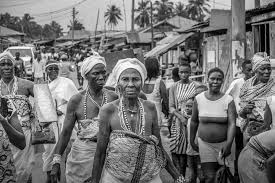
This dramatic departure is commemorated annually through the Hogbetsotso Festival, celebrated primarily in Ghana’s Volta Region. The festival serves not only as a remembrance of liberation but also as a reaffirmation of unity among Ewe communities spread across Ghana, Togo and Benin.
The Ga Narrative: Tyranny and Strategic Survival
While the Ga people are historically associated with Ghana’s coastal capital region, their oral tradition also contains themes that closely mirror the Ewe experience.
The 19th-century historian Carl Christian Reindorf documented Ga oral history extensively in his writings. According to Ga accounts, the people once endured harsh rule under Queen Dode Akabi, whose demands and authority created social strain.
In the Ga version, elders again play a crucial role in strategizing survival against oppressive authority. Some narratives mention unrealistic construction demands similar to those found in the Ewe story. The parallels, oppressive leadership, wise elders, and communal resistance, are too pronounced to ignore.
However, unlike the Ewe exodus from Notsie, historians suggest that Ga migration patterns were influenced by conflicts and regional power struggles rather than a single tyrannical ruler alone. For example, wars involving the powerful Akwamu state in the 17th century caused significant displacement along the coast, affecting Ga settlements before they re-established themselves around present-day Accra.
Linguistic and Cultural Connections
The Ga language belongs to the Ga-Dangme linguistic group, often collectively referred to as Ga-Adangbe. Linguists classify it separately from the Ewe language, which belongs to the Gbe language cluster. Despite linguistic differences, prolonged interaction through trade, warfare, intermarriage and migration may have allowed cultural stories to influence one another.
Historians note that oral traditions often evolve, blending memory, symbolism and identity formation. In pre-colonial West Africa, where written records were limited, history was preserved through storytelling, festivals, songs and ritual performance. Over generations, themes of oppression and liberation became powerful identity markers.
Festivals as Living Historical Archives
Both the Ewe and Ga people maintain festivals that encode their historical memory.
The Hogbetsotso Festival symbolizes the Ewe break from tyranny and the beginning of freedom. It reinforces unity across national borders and celebrates the wisdom of elders who guided the escape.
Similarly, the Ga people celebrate the Homowo Festival, a festival rooted in overcoming famine and hardship. “Homowo” literally means “hooting at hunger,” symbolizing triumph over adversity. Though not directly tied to the same migration narrative, it shares the broader theme of communal resilience.
These festivals function as cultural textbooks, transmitting historical consciousness from one generation to the next.
Scholarly Perspectives and Ongoing Debate
Modern historians caution against interpreting oral similarities as proof of identical origins. Some argue that the tyrant-escape motif is common in migration traditions worldwide. Others suggest that centuries of coexistence between Ewe and Ga communities could have led to narrative borrowing.
Archaeological findings, linguistic analysis, and early European accounts indicate that both groups had established settlements in southern Ghana by the 17th century. However, precise migration timelines remain contested due to limited written documentation from the pre-colonial period.
What remains clear is that both communities possess deeply rooted histories in Ghana’s socio-political evolution. From coastal trade networks to inland agricultural settlements, their contributions shaped economic, political and cultural development long before colonial rule.
A Shared Theme: Resistance and Identity
Beyond academic debate, the real significance of these migration stories lies in their symbolic power. Both narratives highlight:
- The importance of wise leadership
- Collective decision-making
- Resistance against unjust authority
- The preservation of identity under pressure
These themes continue to resonate in contemporary Ghana, where ethnic identity coexists within a unified national framework.
Why This History Matters Today
Understanding the shared elements in the Ewe and Ga migration traditions fosters greater appreciation of Ghana’s interconnected heritage. In a nation of more than 70 ethnic groups, recognizing overlapping histories can promote unity rather than division.
As Ghana continues to strengthen its democratic institutions and cultural diplomacy, revisiting foundational migration stories reminds citizens that resilience and collaboration are long-standing national traits.
Conclusion
The migration histories of the Ewe and Ga people remain powerful testaments to endurance and adaptability. Whether through the dramatic escape from Notsie or the survival strategies of coastal Ga communities, both groups narrate histories defined by courage and communal wisdom.
While scholars may continue debating the precise historical intersections, the broader lesson endures: Ghana’s ethnic groups are not isolated stories but interconnected chapters in a shared national journey.