Residents and business owners across Buluk, covering Builsa North and Builsa South, are raising concerns over recurring power outages that frequently accompany rainfall, saying the interruptions are increasingly affecting businesses, health facilities, schools, workers and households.
For many residents, the problem has become a familiar pattern: when rain comes, electricity supply is often interrupted, sometimes for several hours. Residents engaging with Voice of Buluk say the outages occur during heavy storms but can also happen during relatively mild rainfall.
The latest prolonged interruption occurred following the rains on Thursday, September 17, 2026, when electricity supply in parts of Buluk reportedly went off at about 4:00 p.m. and was restored at approximately 10:00 a.m. on Friday, September 18.
That represents roughly 18 hours without electricity, according to accounts received by Voice of Buluk.
Power outages putting pressure on businesses
The recurring outages are creating particular difficulties for businesses that depend on electricity to operate or preserve their products.
Businesses that rely on refrigerators and freezers to store food, drinks and other perishable products may have to seek alternative sources of electricity when outages persist. This can increase operating costs for business owners who already face other challenges associated with running enterprises in the area.
For small businesses, prolonged outages can also mean lost trading hours and potential damage to stock.
Residents say the situation therefore goes beyond the inconvenience of having no lights at home, because electricity reliability has become directly connected to economic activity and livelihoods in Buluk.
Health facilities also face challenges
Health facilities are another major concern.
Reliable electricity is important for health facilities that depend on power for lighting, refrigeration, medical equipment and other essential operations. Extended interruptions can therefore create additional operational difficulties, particularly when alternative power sources are unavailable or expensive to operate.
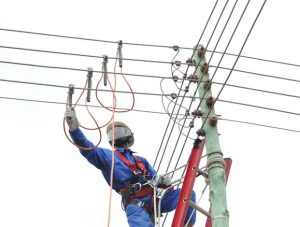
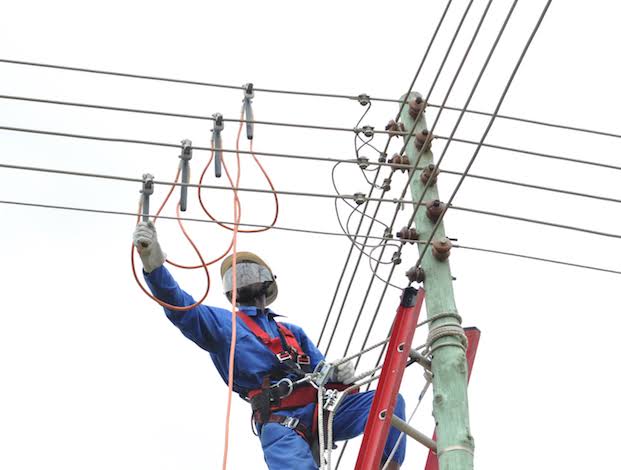
The concerns raised by residents come at a time when the Electricity Company of Ghana (ECG) itself acknowledges that faults associated with storms can cause interruptions to electricity supply.
According to ECG, heavy rainstorms and strong winds can cause trees, billboards and other objects to fall onto electrical conductors, resulting in outages. The company explains that some temporary feeder interruptions are restored relatively quickly after storms, while permanent faults may require engineers to undertake repairs before supply can be restored.
However, the repeated nature of the problem in Buluk is prompting residents to ask whether there are longer-term infrastructure measures that could reduce the frequency and duration of the outages.
Workers and students affected
The impact is also being felt by workers and students.
Residents say prolonged power interruptions affect household routines, including ironing school uniforms and work clothes, charging phones and electronic devices, studying at night and carrying out other daily activities that depend on electricity.
For students preparing for examinations or completing assignments, extended outages can be particularly disruptive when alternative lighting or charging facilities are unavailable.
Residents ask: Why does this keep happening?
The growing concern among residents is not simply about a single outage.
Instead, residents want answers about why electricity interruptions appear to recur whenever rainfall affects the area and what is being done to address the underlying problem.
Among the questions being raised are:
- Why does rainfall repeatedly trigger prolonged power outages in Buluk?
- Are there specific faults or weaknesses in the electricity distribution network serving the area?
- What measures are ECG and other relevant authorities taking to prevent repeated interruptions?
- Can the existing electricity infrastructure adequately meet the needs of the growing communities?
- Would additional distribution infrastructure or a dedicated power substation improve reliability in Buluk?
The suggestion for a power substation in Buluk is coming from some residents who believe that strengthening local electricity infrastructure could help address the recurring problem.
Whether a new substation would be technically appropriate, however, would require assessment by the relevant power authorities based on factors including the existing network configuration, load demand, transformer capacity and other technical considerations.
A call for a lasting solution
Residents engaging with Voice of Buluk are encouraging the government, ECG and other relevant authorities to investigate the recurring outages
A call for a lasting solution
Residents engaging with Voice of Buluk are encouraging the government, ECG and other relevant authorities to investigate the recurring outages in Buluk and identify a lasting solution.
For residents, the issue is about more than darkness in homes.
It is about businesses protecting their investments, health facilities maintaining essential services, students studying, workers preparing for work, traders preserving their stock and communities being able to carry out normal economic and social activities without repeated disruption.
The September 17–18 outage has once again brought the issue into sharp focus.
Residents now want the relevant authorities to explain what is causing the recurring interruptions and, more importantly, what concrete measures can be put in place to ensure that rainfall does not routinely translate into prolonged electricity outages across Buluk.
ECG currently advises customers experiencing localised outages or fallen or sagging electrical conductors to report them through its call centre, the nearest ECG office or its official social media channels.
For Buluk residents, however, the central concern remains whether individual fault reporting can address a problem they describe as recurring, or whether a broader investment in the electricity distribution infrastructure serving Builsa North and Builsa South is needed.