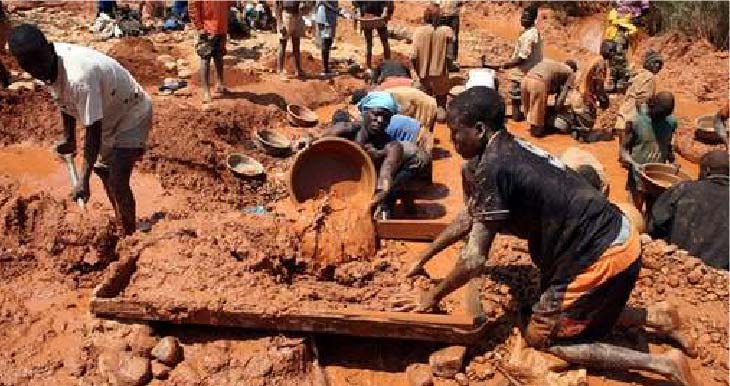
The debate over Ghana’s fight against illegal small-scale mining, popularly known as galamsey, has intensified following renewed calls from civil society, legal experts, and government officials for tougher measures to protect the country’s environment.
On Saturday, September 20, 2025, private legal practitioner Kofi Bentil urged government to declare areas affected by illegal mining as security zones. According to him, such a move would legally empower the military to move in and deal decisively with illegal miners.
“Declare security zones, let us move our military there and leave them to do the work,” Bentil said on TV3’s KeyPoints.
The IMANI Africa Vice President further criticized the government’s handling of galamsey, stressing that Ghana lacks the political will to end the menace. He described current interventions as “political rhetoric” and warned that without strong action, the devastation of Ghana’s lands and water bodies will continue.
Martin Kpebu: Let Police Lead the Fight Against Galamsey
Another private legal practitioner, Martin Kpebu, however, disagreed with deploying the military. Speaking on the same program, he argued that the Police Service already has the legal mandate and capacity to tackle galamsey.
“Let us exhaust the law. The Police can do the work. A state of emergency is not a magic wand—you will still need the Police to enforce it,” Kpebu said.
Kpebu also supported President John Dramani Mahama’s reluctance to declare a state of emergency, noting that government agencies already have enough powers to enforce mining regulations, arrest offenders, and seize illegal equipment.
Mahama Backs Repeal of L.I. 2462 on Mining in Forest Reserves
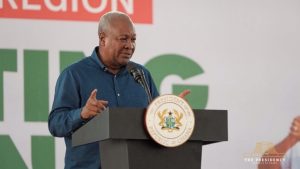
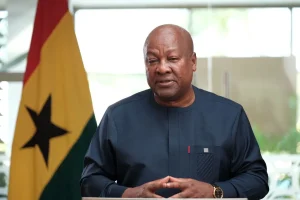
At a media encounter on September 10, 2025, President Mahama emphasized that his administration had not issued any new mining licenses in Ghana’s forest reserves since taking office. He announced that government is taking steps to repeal L.I. 2462 and its amended version, L.I. 2501, which currently regulate mining in forest reserves.
The President explained that revoking the law would demonstrate his government’s commitment to ending mining in protected forest areas.
“Steps are underway to repeal L.I. 2462 to formalize our commitment to end mining in forest reserves. Since my administration resumed office, not a single license has been issued to any company to mine in these areas,” Mahama stated.
The Acting Minister for Environment, Science, and Technology, Emmanuel Armah-Kofi Buah, has already written to the Attorney-General’s Office for the immediate revocation of the controversial law.
Why L.I. 2462 Has Been Controversial
Enacted under the Environmental Protection Agency Act, L.I. 2462 permitted mining in forest reserves under specific conditions but controversially gave the President authority to approve mining in restricted areas deemed of “national interest.”
The regulation faced fierce backlash from civil society organizations and environmental activists, who argued it contributed to environmental degradation and failed to protect Ghana’s biodiversity.
In October 2024, the Attorney-General began the process of repealing L.I. 2462 by laying the Environmental Protection (Mining in Forest Reserves) (Revocation) Instrument, 2024 before Parliament. This new law seeks to make all mining in forest reserves completely illegal.
Strengthening the Galamsey Fight
According to the Ministry of Environment, repealing the L.I. will help unify Ghana’s regulatory framework and strengthen the work of institutions such as the Environmental Protection Agency (EPA) and the National Anti-Illegal Mining Operations Secretariat (NAIMOS).
The move also complements initiatives like the Responsible Cooperative Mining and Skills Development Programme (rCOMSDEP), which promotes sustainable livelihoods for small-scale miners.
As the debate continues, one thing remains clear: Ghana’s battle against galamsey is at a crossroads. Whether through military action, police enforcement, or stricter legislation, the outcome will shape the future of the country’s forests, water bodies, and communities.