The recent revelation regarding the sale of over 300 Metro Mass Transit buses has sparked a heated debate over how public assets are managed or mismanaged in Ghana. According to social activist Oliver Barker-Vormawor, these buses were disposed of for a “pittance,” allegedly as low as GHC 2,500 per unit.
While officials claim the vehicles were “unserviceable,” the math doesn’t seem to add up for the average Ghanaian. Even as scrap metal, a bus of that size should command a significantly higher market value. This incident highlights a systemic failure: the absence of a proper, transparent government auction system in Ghana.
In Ghana, when the state no longer needs equipment be it buses, furniture, or laptops they often “disappear” or are sold through quiet, undocumented auctions. These “sweetheart deals” ensure that insiders and those in the right circles benefit from low prices, while the taxpayer recovers nothing.
Barker-Vormawor notes that this mess is most visible at the ports. Containers and vehicles are disposed of with zero public information and weak oversight. Unless you are “connected,” you will likely only hear about these auctions after the items have already been moved.
A Contrast in Transparency: The US Model
The lack of a centralized platform is not a “resource” problem; it is a “transparency” problem. In the United States, a simple portal called GovDeals lists over a million items at any given time. From office desks to farm equipment and trucks, everything is listed openly. Anyone can bid, and the market drives the price.
Even within Ghana, the US Embassy demonstrates that a transparent system is possible. They conduct their auctions online with no secrecy and no drama.
The Story of “White Maria”
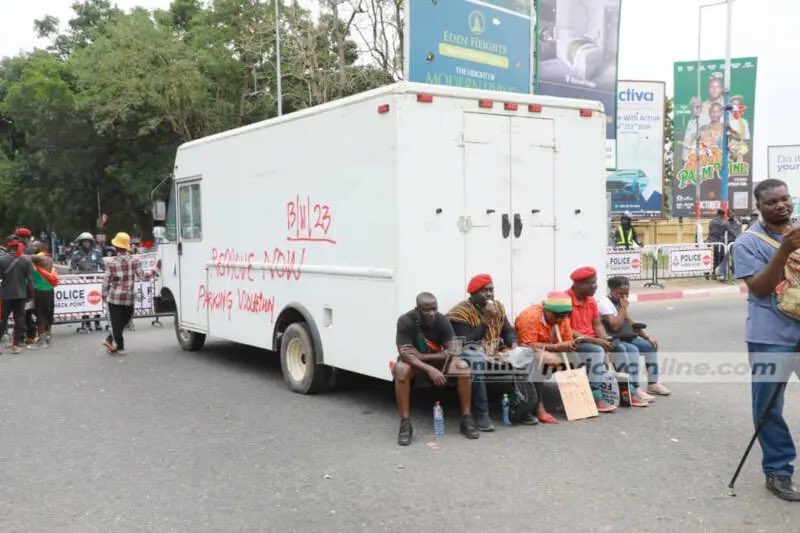
Perhaps the most ironic example of this contrast is the “White Maria”—the van used by the FixTheCountry movement for demonstrations. Barker-Vormawor revealed that this vehicle was not acquired through a “fixer” or a friend in government. Instead, it was purchased through a competitive, open bidding process via the US Embassy’s online auction.
It went from being a US government asset to a tool for grassroots activism, simply because there was a fair system in place to buy it.He added
The Cost of Negligence
Walking through government ministries or district assemblies in Ghana according to him, reveals a “graveyard” of public assets. Vehicles with flat tires and peeling paint sit for years, rotting away until they are worth nothing. By the time the state decides to “clear” them, the recovery value is zero.
The Solution: A National Auction Portal
He indicated that, fixing this does not require foreign consultants or massive budgets. It requires the political will to be organized. Ghana needs:
- A Single National Auction Portal for All surplus assets to be listed online.
- Mandatory Listings of Every agency to report surplus equipment.
- Public Bidding. An open access for every citizen to see and bid on items.
- Independent Oversight to ensure no price-fixing or self-dealing occurs.
As Barker-Vormawor stressed that, the most bothersome part of this saga is the lack of urgency and shame in how public property is handled. It is time for Ghana to move away from “quiet auctions” and into a digital era of accountability.