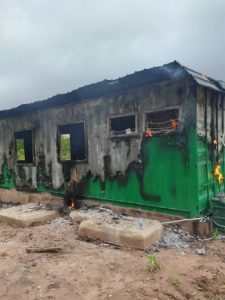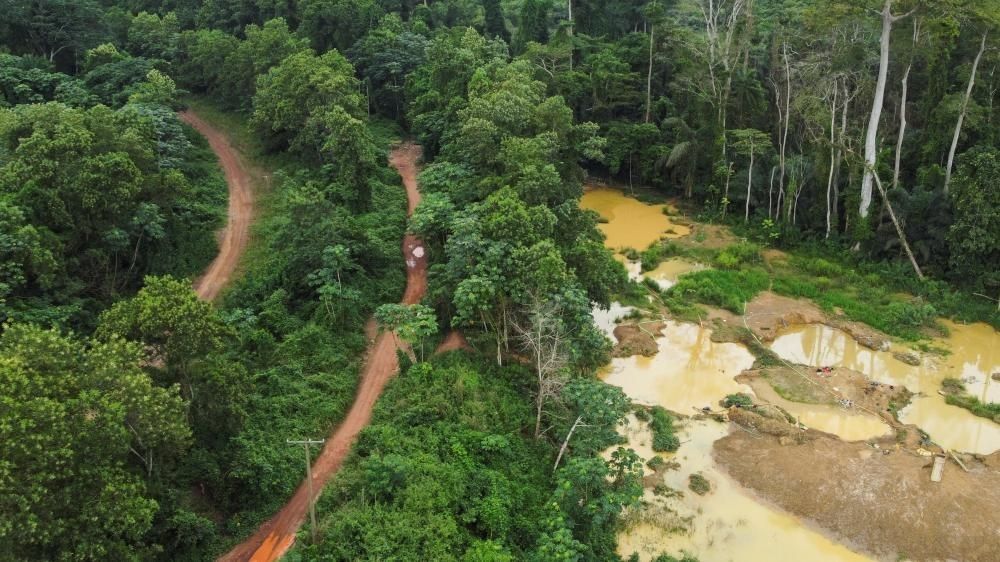
The Government of Ghana has officially repealed Legislative Instrument (L.I.) 2462, the law that granted the President authority to permit mining activities in forest reserves, marking a major policy shift in the country’s fight against illegal mining, popularly known as galamsey.
The revocation follows the laying of a new Legislative Instrument by the Minister for Lands and Natural Resources, who also serves as Acting Minister for Environment, Science and Technology, Emmanuel Armah-Kofi Buah. The new law, titled the Environmental Protection (Mining in Forest Reserves) Revocation Instrument, 2025, matured into law on Wednesday, December 10, 2025, after completing the mandatory parliamentary processes.
With this development, L.I. 2462 has been completely revoked.
Government Responds to Public Outcry and Scientific Evidence
Announcing the repeal at the 7th United Nations Environment Assembly (UNEA-7) in Nairobi, Kenya, on behalf of President John Dramani Mahama, Mr. Armah-Kofi Buah said the decision was informed by scientific assessments and sustained public concern over the environmental impact of mining in forest reserves.
“Scientific review and public concern made it clear that L.I. 2462 could not protect our forests and water bodies. Ghana therefore chose the responsible path. The Instrument was withdrawn and repealed. Science spoke, the people spoke, and leadership responded,” the Minister stated.
He further revealed that several forest reserves have now been classified as “red zones”, where mining activities will be completely prohibited.
Background to the Controversial Law
L.I. 2462, which came into force in November 2022, was initially introduced to regulate mining operations in forest reserves under strict environmental management principles. However, it faced fierce opposition from civil society organisations, environmental activists, and community groups, who argued that it worsened forest degradation and water pollution.
Amid public pressure, the Akufo-Addo administration amended the law by removing Regulation 3(2), which limited presidential powers. This amendment resulted in L.I. 2504, which came into effect on June 2, 2025.
Despite the amendment, concerns persisted, prompting the current government to fully revoke both L.I. 2462 and L.I. 2504.
Civil Society Welcomes Repeal, Raises Fresh Concerns
Environmental advocacy groups have welcomed the repeal but warn that it does not, on its own, solve the galamsey menace.
Awula Serwah, a representative of Eco-Conscious Citizens, cautioned that illegal miners continue to operate outside the legal framework.
“LI 2462 is about licensing, but the people destroying our forests are not waiting for licenses. They are poisoning our water bodies and decimating forest reserves. We are still on the verge of an ecological disaster if urgent enforcement measures are not taken,” she warned.
Government Reaffirms Commitment to Environmental Protection
Laying the revocation instrument in Parliament on October 31, 2025, Mr. Armah-Kofi Buah said the repeal demonstrates the government’s renewed commitment to protecting Ghana’s natural resources.
He explained that until a new comprehensive Legislative Instrument is introduced, any legal mining activity will be guided by revised 2022 environmental guidelines, with strict safeguards.
A Turning Point in Ghana’s Anti-Galamsey Fight
The repeal of L.I. 2462 fulfils a long-standing demand by environmental groups and corrects what critics described as a major policy failure under the previous administration. Former President Nana Addo Dankwa Akufo-Addo had faced sustained criticism for failing to completely revoke the law despite earlier assurances.
With forest reserves now legally protected from mining, attention is expected to shift toward enforcement, prosecution of illegal miners, and long-term restoration of degraded lands and polluted water bodies.
The government says the repeal marks a decisive step toward safeguarding Ghana’s forests, rivers, and ecological future.