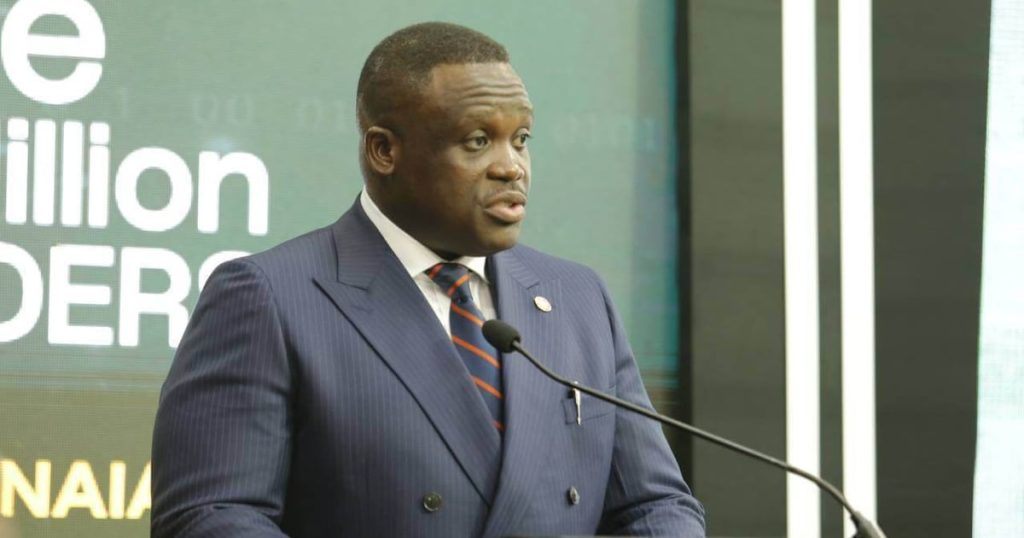
Ghana is expected to begin the deployment of 5G technology by December 2026, following the completion of the process for assigning spectrum to operators, Communications, Digital Technology and Innovations Minister Samuel Nartey George has announced.
The announcement marks a significant step in Ghana’s efforts to expand high-speed connectivity and accelerate the country’s digital transformation.
Speaking at the Government Accountability Series in Accra on Monday, September 7, 2026, Mr George said the government expects the assignment of the necessary spectrum for 5G services to be completed before the end of the year, paving the way for deployment.
5G deployment expected to start by December
The Communications Minister said Ghana’s 5G rollout is being pursued as part of broader reforms in the telecommunications sector.
The government has been working to create a more competitive environment for 5G deployment, including changes to the previous arrangements surrounding access to spectrum and the operation of 5G infrastructure.
Mr George’s latest announcement provides a clearer timeline for consumers and businesses waiting for wider access to next-generation mobile connectivity.
The December 2026 timeline, however, should be understood as the expected beginning of deployment, rather than an indication that nationwide 5G coverage will be completed within the month.
Government seeks wider access to 5G
The government has previously indicated that it wants Ghana’s 5G infrastructure to be deployed on a more competitive basis.
In March 2026, the National Communications Authority announced plans to remove the exclusivity provision previously attached to Next-Gen Infraco’s 5G licence. The NCA said the move was intended to promote competition, innovation, consumer choice and better service quality.
The government has also set an ambitious target of achieving 70% population-density coverage with 5G by the country’s 70th Independence anniversary next year, according to an earlier statement by Mr George.
What 5G could mean for Ghana
The rollout of 5G is expected to provide faster and more reliable connectivity, potentially supporting sectors such as digital finance, education, healthcare, agriculture, entertainment and business.
Faster networks could also support the growth of technologies that require high-speed and low-latency connections, including cloud services, artificial intelligence applications, Internet of Things devices and advanced digital services.
For businesses, improved connectivity could help expand access to digital platforms and support more efficient online operations.
The government’s broader digital agenda also includes programmes aimed at increasing digital skills and expanding access to technology across the country.
Rural connectivity remains a priority
While 5G is expected to transform connectivity in major urban and commercial areas, the government is simultaneously working to improve basic mobile broadband access in underserved communities.
Mr George said the government is working to upgrade ageing 2G and 3G infrastructure in rural areas to 4G-capable networks as part of efforts to bridge Ghana’s digital divide.
He argued that access to a mobile signal alone is no longer sufficient as services such as mobile money, digital agriculture, e-learning and telemedicine increasingly depend on reliable broadband connectivity.
This means Ghana’s telecommunications strategy is being pursued on two fronts: expanding next-generation technologies such as 5G while improving the quality of existing networks in communities that remain underserved.
Spectrum assignment remains key
Before commercial 5G services can expand significantly, the necessary spectrum resources must be assigned to operators under the country’s regulatory framework.
The government has therefore placed spectrum allocation at the centre of its preparations for the rollout.
Mr George’s latest announcement suggests that once this process is completed, Ghana could move from preparation to actual deployment before the end of 2026.
For consumers, the next major question will be how quickly 5G coverage expands after deployment begins and how affordable 5G-enabled devices and data services become.
Ghana’s planned 5G rollout therefore represents not just an upgrade in mobile network technology, but a potentially important component of the country’s wider digital transformation agenda.