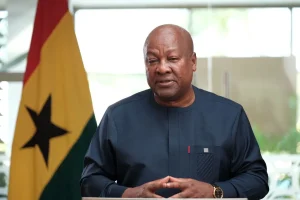
President John Dramani Mahama has called on Africans and people of African descent across the globe to unite in the fight for reparative justice and the reclamation of Africa’s historical narrative, urging a deliberate rejection of distortions that have long undermined the continent.
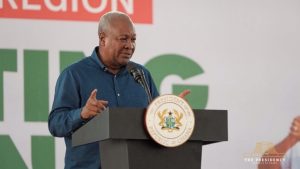
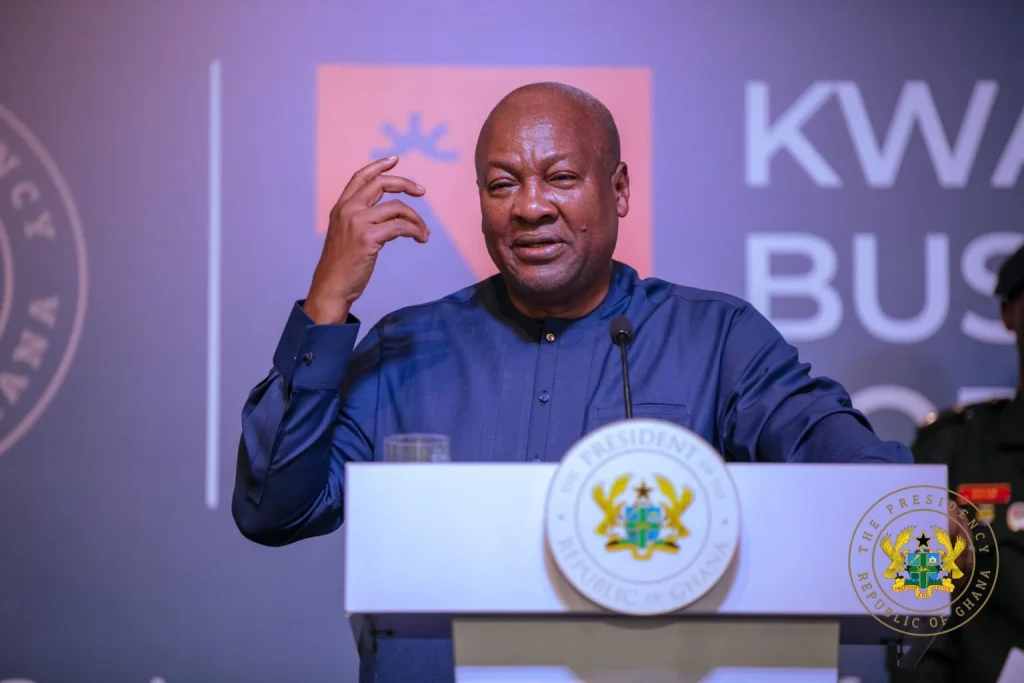
Speaking at the Diaspora Summit held at the Accra International Conference Centre, President Mahama said Africans must intentionally reverse the narratives and systems used by oppressors to divide the continent and its diaspora.
“Anything in this life, once stripped of its power, will no longer work. That is true of stories, especially ones that are complete fabrications,” he said. “Let’s take the narrative of those who oppressed us and flip it. Let’s reverse their entire modus operandi.”
The summit, held under the theme “Resetting Ghana: The Diaspora as the 17th Region,” brought together Africans on the continent and in the diaspora to discuss unity, development, and justice. President Mahama stressed that despite centuries of forced separation, Africans have always sought ways to reconnect.
“Africans in the diaspora whose forebears were enslaved have kept us in their rhythms,” he noted, adding that shared culture and identity continue to bind Africans worldwide.
Pan-African Legacy and the Black Star
President Mahama paid tribute to leading Pan-Africanists, including Marcus Garvey and Ghana’s first President, Dr Kwame Nkrumah, for their historic efforts to foster unity among Africans globally. He said Ghana’s Black Star remains a powerful symbol of Pan-Africanism and collective African identity.
“The Black Star has become a defining part of our national identity because it embodies the rallying cry for the unity of all African peoples,” he stated.
UN Motion on Reparations
In a major policy announcement, President Mahama reaffirmed his commitment to move a motion at the United Nations next year seeking formal recognition of the transatlantic slave trade as the greatest crime against humanity. He called on Africans and the diaspora to rally behind the initiative.
“Africa has suffered slavery, colonialism, genocide and apartheid. We demand acknowledgement of these crimes against humanity,” he said. “We demand the establishment of legal, institutional and international mechanisms to advance reparative justice.”
According to President Mahama, reparations must go beyond symbolism and include concrete measures such as debt cancellation, monetary compensation, the return of stolen artefacts, institutional reforms and a transformation of the global economic system to address historical injustices.
No Luxury of Forgetting
The President warned against historical amnesia, noting that attempts to downplay Africa’s suffering only serve to perpetuate inequality and racism.
“We are at a place in our journey where we do not have the luxury of forgetting,” he said, citing increasing racist rhetoric and demeaning descriptions of Africans in global discourse.
“This is precisely the time when we must advance the process of reclamation and speak loudly and clearly about what we have lost and what we seek to regain.”
Regional Support for Reparations
Also speaking at the summit, President of the Council of Ministers of Togo, Faure Gnassingbé, strongly endorsed calls for reparations, describing them as essential to Africa’s development and global stability.
President Gnassingbé argued that recognition alone was insufficient, stressing the need for concrete legal and institutional frameworks to translate historical memory into lasting progress. He proposed debt cancellation, multilateral funding for education and innovation, and stronger legal commitments within the United Nations system.
He further highlighted the critical role of the African diaspora in advancing sovereignty and healing historical wounds, calling for renewed investment in youth, knowledge mobility and economic self-determination.
The summit concluded with renewed calls for collective African action, positioning unity and reparative justice as central pillars in redefining Africa’s place in the global order.