Among the Builsa people of Ghana’s Upper East Region, final funeral rites are not merely ceremonies of mourning, they are profound spiritual, cultural, and communal obligations. Central to these rites are practices such as nangsa-fobka and kpaglika, which involve the ritual killing of animals as part of honoring the deceased and appeasing ancestral spirits.
While these traditions are deeply rooted and symbolically powerful, growing voices within the community are beginning to question whether aspects of the process, particularly the manner in which animals are killed, can evolve without undermining cultural integrity.
Understanding Nangsa-Fobka and Kpaglika
Nangsa-fobka refers to the killing of an animal and its use as nang-foba (dead animal), symbolically detaching the deceased from earthly ties. It represents a spiritual transition, a formal severance between the departed and worldly existence.
Kpaglika, on the other hand, involves the killing of additional animals, kpaglug (one animal) or kpaglugta (multiple animals), beyond the primary nang-foba. These additional sacrifices are meant to pacify older ancestral spirits who may not have received similar honors during their own funeral rites.
For example, during the final funeral rites of Nab Azantilow, a revered paramount chief, a significant number of cattle were used for kpaglika. The scale of the sacrifice was not only a reflection of the chief’s stature and wealth but also a means of honoring ancestors who had not been accorded similar rites. The ceremony also had social benefits, as large quantities of meat were distributed to community members, many of whom rarely have access to such food.
The Growing Ethical Debate
Amid respect for tradition, a critical conversation is emerging, not about whether the rites should exist, but about how they are carried out.
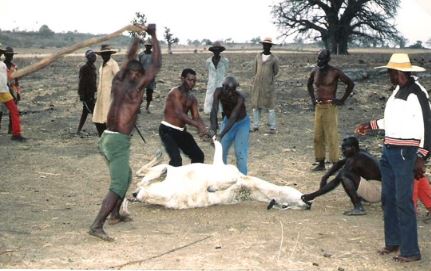
During these rituals, animals are reportedly beaten with sticks until they die. While this method has been passed down through generations, some observers describe it as excessively harsh and potentially inhumane.
The concern is not an attack on culture. Rather, it is a call for reflection: Can the spiritual objectives of the rite be preserved while adopting less extreme methods of animal slaughter?
Across many cultures globally, traditional animal sacrifice has evolved over time to incorporate more humane approaches without compromising symbolic meaning. The core spiritual significance lies in the offering itself, not necessarily in the specific physical method used.
Culture and Compassion: Can They Coexist?
Cultural preservation is vital. The traditions of the Builsa people form part of Ghana’s rich anthropological heritage. Yet culture is not static; it is dynamic and adaptive.
The central question becomes:
Can traditional authorities, elders, and cultural custodians initiate dialogue about humane practices while safeguarding sacred meanings?
Such a conversation would not diminish the rite. On the contrary, it could strengthen it, demonstrating that tradition is capable of moral reflection and responsible evolution.
A Call for Community Dialogue
This is not a condemnation of ancestral customs. It is an appeal for thoughtful engagement.
If the purpose of nangsa-fobka and kpaglika is spiritual transition, ancestral appeasement, and communal unity, then perhaps the manner of execution can be reconsidered without eroding their essence.
As younger generations increasingly engage with global ethical standards around animal welfare, proactive dialogue within the community may help preserve the rites for the future rather than expose them to external criticism or misunderstanding.
Respect for heritage and compassion for living creatures need not stand in opposition.
Source: https://www.buluk.de/Buluk7/FuneralsEvans.htm