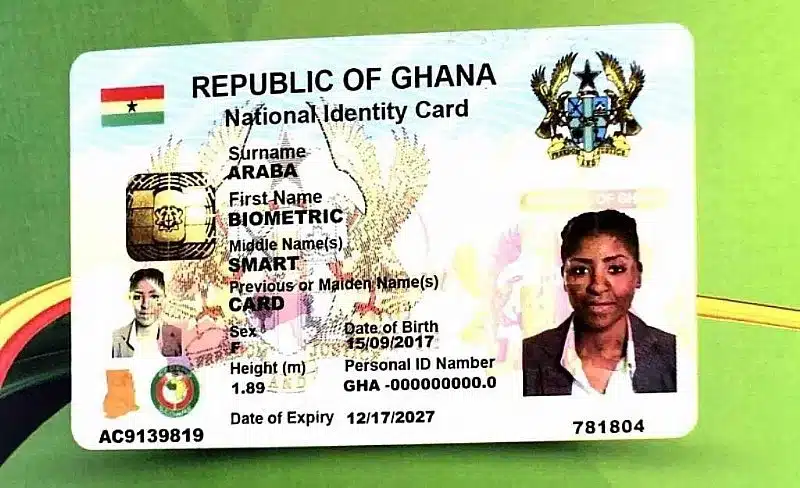
The National Identification Authority (NIA) has announced that it will begin issuing Ghana Cards to children aged 6 to 14 years starting Monday, October 6, 2025.
This marks a major step in Ghana’s national identification drive, aimed at ensuring every citizen—regardless of age—has a unique national ID that facilitates access to public services and helps strengthen the national database.
First Phase Targets 56 Districts Nationwide
According to a statement from the NIA, the first phase of the Ghana Card for Children exercise will take place in 56 districts across the country, covering children who have already completed the registration process. The cards will be distributed at the same schools where the initial registration took place, ensuring convenience and accessibility for pupils and parents.
Each child must be physically present and accompanied by a parent or legal guardian during collection. Parents or guardians are also required to present the registration receipt (Form A) issued during the registration period.
Clearing Backlogs and Expanding Coverage
The NIA assured the public that all backlogs of unprinted Ghana Cards have been successfully cleared, paving the way for the smooth rollout of the children’s card issuance. The Authority further noted that additional districts will be covered in the subsequent phases of the exercise.
The Authority also hinted at plans to announce new registration dates for children within the 6–14 age bracket who missed the earlier registration, ensuring that no eligible child is left out of the national identification system.
Parents Urged to Cooperate
The NIA appealed to parents and guardians to fully cooperate with officials during the issuance period to ensure a smooth and efficient process. The exercise forms part of Ghana’s broader national identification agenda, which supports initiatives like education data management, healthcare access, social protection, and digital financial inclusion.
Background: Ghana Card and National ID Goals
The Ghana Card is Ghana’s official national identification card and serves as a multi-purpose identity document for accessing government services, banking, voting, health insurance, and travel within the ECOWAS sub-region. The inclusion of children in the database marks an important milestone in achieving universal coverage under the National Identification System (NIS), aligning with SDG 16.9, which calls for legal identity for all by 2030.
The ongoing efforts by the NIA are part of a larger digital transformation agenda by the government to ensure accurate population data, enhance service delivery, and curb identity-related fraud.