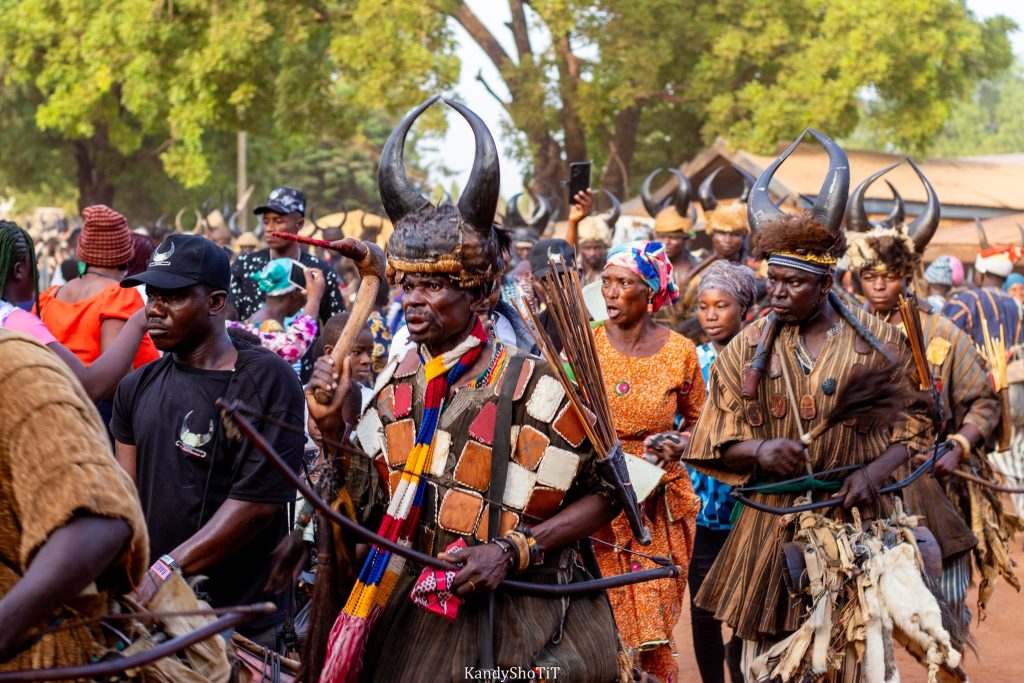
In the cultural and spiritual life of the Bulsa people of northern Ghana, tradition is not merely remembered, it is lived. One such enduring institution is Pok Nong, literally translated as “the Friend of the Family.” Far from a casual designation, Pok Nong represents a deeply respected ritual role that binds families to ancestral authority, moral order, and spiritual protection.
Who Is the Pok Nong?
The Pok Nong is not chosen by popularity, wealth, or political influence. According to the documented tradition, the Pok Nong emerges through spiritual selection, often confirmed through divination and ancestral signs. Once appointed, the individual becomes the ritual custodian of a family or lineage, entrusted with sacred responsibilities that transcend generations.
Unlike chiefs or clan heads whose authority may be territorial, the Pok Nong’s power is familial and spiritual, deeply personal to the households under his guardianship.
Spiritual Duties and Ritual Authority
The Pok Nong performs several indispensable functions:
- Intermediary between the living and the ancestors
- Custodian of family shrines and ritual objects
- Presider over sacrifices, cleansing rites, and thanksgiving rituals
- Spiritual advisor during crises such as illness, death, infertility, or persistent misfortune
The document emphasises that families do not approach the ancestors directly; the Pok Nong serves as the approved spiritual channel, ensuring rituals are conducted correctly to avoid ancestral displeasure.
Moral Guardian and Social Stabiliser
Beyond ritual functions, the Pok Nong is also a moral compass within the family. He mediates disputes, restores harmony after conflicts, and ensures that taboos and moral expectations tied to the ancestors are upheld.
In Bulsa belief, unresolved family conflicts are not merely social problems, they are spiritual risks. The Pok Nong’s role, therefore, is preventative as much as it is corrective.
Pok Nong and the Bulsa Ritual Calendar
The institution of Pok Nong is closely aligned with the Bulsa ritual calendar, particularly during periods of communal sacrifices, agricultural rites, and ancestral remembrance. His presence is mandatory during key ritual moments, reinforcing continuity between seasons, ancestors, and the living community.
This alignment highlights how Bulsa spirituality is cyclical rather than linear, rooted in time, land, and lineage.
Relevance in Contemporary Buluk Society
Despite increasing urbanisation, Christianity, Islam, and modern governance structures, Pok Nong remains relevant. Many families continue to consult their Pok Nong quietly, even when outwardly aligned with modern religions.
The document underscores that Pok Nong is not in opposition to modernity, but rather functions as a cultural anchor, preserving identity, history, and social cohesion in a rapidly changing world.
Preserving Buluk Heritage
As debates around cultural preservation intensify, Pok Nong stands as a powerful reminder that Bulsa traditions are not relics of the past but living systems of knowledge. Documenting and understanding institutions like Pok Nong is essential, not only for cultural pride but for historical accuracy and intergenerational education.
Conclusion
Pok Nong, the “Friend of the Family,” is more than a ritual title, it is a sacred trust. Rooted in ancestral wisdom, moral responsibility, and spiritual stewardship, the institution continues to shape Bulsa family life and identity. In telling this story, we preserve not just a tradition, but the soul of Buluk itself.
However, the continued relevance of Pok-Nong faces growing challenges in the wake of modernization, formal education, urban migration, and the expansion of Christianity and Islam. For many younger Bulsa, ancestral mediation is increasingly replaced by religious leadership and modern legal or social institutions.
As a result, the Pok-Nong institution is gradually receding from everyday family life, surviving more in memory than in practice. Yet this shift presents a cultural paradox: while religion and modern governance offer new moral and social frameworks, they also risk severing families from indigenous systems of identity, accountability, and ancestral continuity.
The fading of Pok-Nong therefore raises an urgent cultural question, not whether society should reject modernity or religion, but whether Buluk can integrate progress without erasing the sacred traditions that once anchored family, morality, and communal harmony.
Reference
Kröger, F. (n.d.). The friend of the family or the Pok Nong relationship of the Bulsa in Northern Ghana.