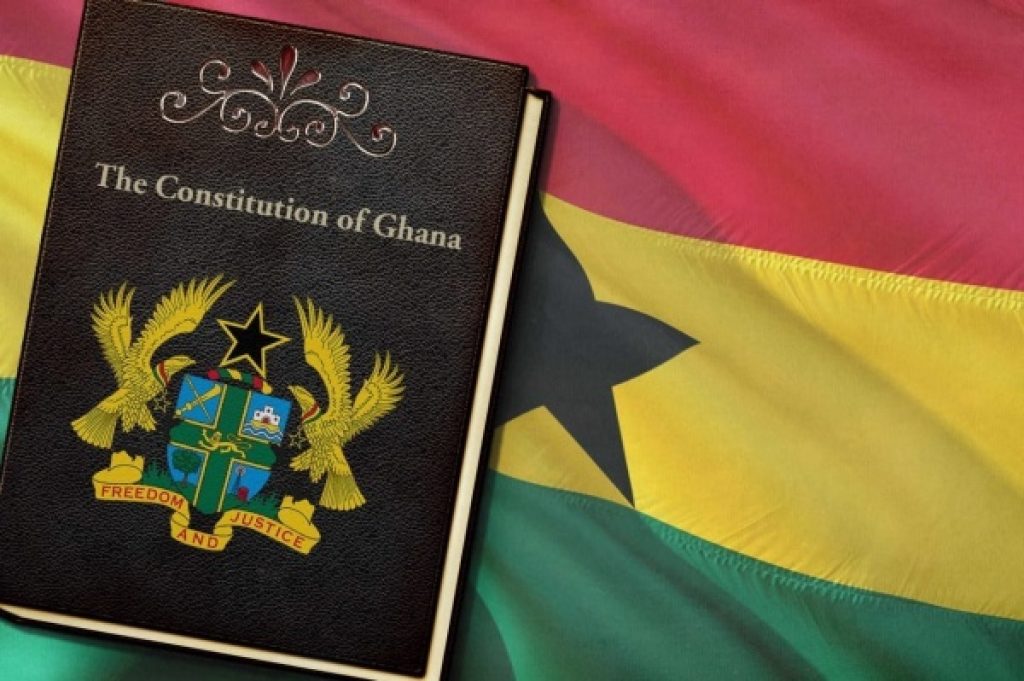
Stakeholders in governance and public administration have renewed calls for a review of Ghana’s presidential term of office, insisting that an extended tenure could strengthen policy continuity, reduce political interference, and enhance national development.
The appeal was made during a constitutional lecture organized by the Civil and Local Government Staff Association of Ghana (CLOGSAG) in Accra on October 29, where participants from academia, civil society, and government institutions engaged in a robust debate on the country’s governance structure.
Short Presidential Term Hurting Development
Governance experts at the event argued that Ghana’s four-year presidential term restricts long-term planning and puts governments under pressure to deliver rapid results within a short period, often at the expense of sustainable development.
“As we speak now, Ghana has got the shortest-term limit for the presidency across the entire African continent,” said Dr. Daniel Appiah, a lecturer and governance expert at the University of Ghana Business School.
“Only Ghana and Nigeria operate such short terms. A developing country cannot use a four-year development cycle to produce magic. If we are to make progress, we must create an effective civil and public service insulated from short-term electoral cycles.”
Dr. Appiah emphasized that reviewing the term limit is critical if Ghana is to achieve any meaningful developmental transformation.
Calls to Revisit Kufuor’s Proposal
The discussion rekindled a proposal first made in 2008 by former President John Agyekum Kufuor, who suggested extending the presidential term to six or seven years to enhance policy implementation and national stability. Although the proposal was shelved at the time, it has now resurfaced and been submitted to the Constitution Review Commission for consideration.
A former Head of the Civil Service, Nana Agyekum Dwamena, threw his weight behind the proposal, noting that longer tenures in other countries have proven effective in maintaining stability and development consistency.
“Ghana does four or eight years, but is there a lesson for us to learn? Former President Kufuor once proposed seven years. Look at other countries; the four- and five-year terms are not helping,” he observed.
Concerns Over Political Interference
The Executive Secretary of CLOGSAG, Isaac Bampoe Addo, raised concerns about the President’s broad powers to appoint and dismiss public service executives, describing it as a source of political interference that undermines neutrality in the civil service.
“The High Court told former President Professor Mills that he could not sack any civil servant,” he stated. “With all due respect, the President cannot dismiss civil servants. Article 195 says you act in accordance with advice, not appoint someone just because they wear a party dress.”
Professionalism and Accountability Urged
The Minister for Labour, Jobs and Employment, Dr. Rashid Pelpuo, urged civil and public servants to uphold professionalism, integrity, and accountability when serving under political leaders.
“There must be fear in ministers to avoid causing trouble,” he said. “Civil servants must be bold enough to offer honest advice to political leaders and not be complacent.”
Push for a Neutral Civil Service
Adding to the debate, Deputy Chief of Staff Nana Oye Bampoe Addo stressed the need for a neutral and professional civil service capable of driving Ghana’s long-term development agenda regardless of political transitions.
“There was a committee that included representatives from the TUC and civil service,” she revealed. “That committee produced a memorandum now before the Constitution Review Commission to address some of these issues.”
The Constitution Review Commission is expected to deliberate on the renewed proposal for a longer presidential term as part of broader constitutional reforms. The debate, experts predict, will shape Ghana’s democratic future by balancing political accountability with developmental continuity.