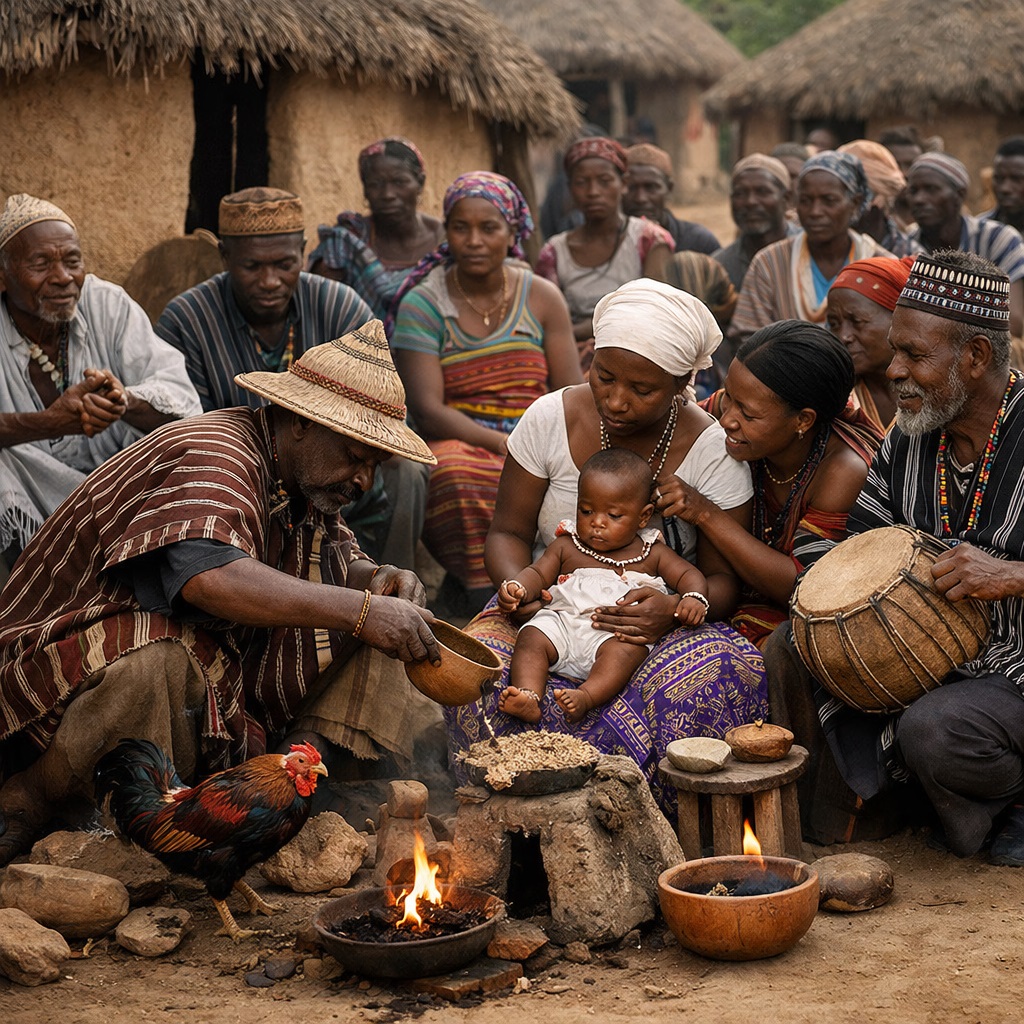
Among the Bulsa people of northern Ghana, a name is not merely a label. It is a declaration of belonging, a spiritual anchor, and a bridge between generations. The traditional Bulsa naming ceremony, known as Segrika, goes far beyond announcing a child’s name. It represents the moment when a child is formally welcomed into the human and spiritual community of the Bulsa people.
In a world where naming has become increasingly casual and administrative, Segrika reminds us that identity is earned, affirmed, and ritually grounded.
Understanding Segrika: More Than a Ceremony
Segrika is the traditional ritual through which a Bulsa child receives a formal Buli name. Unlike naming practices in some Ghanaian societies where a child is named shortly after birth, the Bulsa approach reflects a philosophy of life, survival, and spiritual readiness.
Traditionally, a child was not always named immediately. In many families, naming occurred only after the child showed signs of strength and survival, often when the child began to crawl. This delay was not neglect, it was a cultural acknowledgement of the fragile boundary between life and death in early infancy.
To name a child was to affirm:
“This child has come to stay.”
The Spiritual Foundations of Naming in Bulsa Culture
At the heart of Segrika lies the Bulsa belief in ancestral presence and guardian spirits, known as bogluk. The Bulsa worldview does not separate the living from the dead; rather, it sees them as coexisting participants in family and community life.
Before a child receives a name, elders or parents may consult a diviner (baana/baano) to determine:
- Whether the child is spiritually settled
- Which ancestors or spirits are connected to the child
- The appropriate name and ritual requirements
Naming, therefore, is not chosen solely by parents’ preferences. It is revealed, guided, and sanctioned by spiritual insight.
Ritual Process of the Segrika Ceremony
Though practices vary by family and locality, a traditional Segrika ceremony may include:
1. Consultation and Preparation
A diviner determines the timing and spiritual needs of the ceremony. This stage ensures that the name aligns with the child’s destiny and ancestral connections.
2. Offerings and Sacrifices
Sacrificial offerings, often a chicken, are made at the family shrine. These offerings are acts of communication, gratitude, and request for protection.
3. Medicinal Water and Ritual Acts
Herbal water prepared from roots and plants may be used symbolically. The child may be touched with or given small amounts, signifying cleansing, acceptance, and vitality.
4. Presentation at the Shrine
The child is formally introduced to the ancestral shrine, marking the moment when the ancestors recognize and accept the child as part of the lineage.
5. Pronouncement of the Name
The chosen Buli name is publicly spoken, sometimes by an elder, diviner, or respected relative, cementing the child’s identity within the family and community.
The Meaning of Names in Bulsa Society
Bulsa names are not random. They may reflect:
- Ancestral connections
- Family history
- Circumstances surrounding birth
- Spiritual revelations
Unlike some naming systems, Buli names do not always clearly indicate gender, emphasizing that identity is deeper than social categories. A name carries memory, responsibility, and expectation.
Even today, many Bulsa people carry multiple names, Christian, Islamic, or Western, but the traditional Buli name often remains the true cultural marker of identity.
Naming and Social Belonging
Through Segrika, a child becomes:
- Recognized by the ancestors
- Accepted by the community
- Bound to family obligations and moral values
Without this ritual acknowledgment, a child would traditionally be seen as not fully integrated into Bulsa social life. Naming was therefore essential for inheritance, protection, and spiritual well-being.
Segrika in the Modern Bulsa World
Modern life, migration, religion, and education have transformed how Bulsa people name their children. Many families no longer perform full Segrika ceremonies, opting instead for church naming services or civil registrations.
Yet, across Bulsaland and the diaspora, Segrika remains a symbol of cultural consciousness. Some families blend tradition with modern faith; others revive rituals as acts of cultural preservation.
What remains unchanged is this truth:
A people who remember their naming traditions remember who they are.
Why Preserving Segrika Matters Today
In an era of globalization, Segrika stands as:
- A reminder of Bulsa philosophy on life and survival
- A record of ancestral memory
- A source of cultural pride and continuity
Preserving and documenting Bulsa naming traditions is not about resisting modernity, it is about entering the future with a clear sense of origin.
Conclusion: A Name Is a Story
For the Bulsa, a name is not simply spoken, it is earned, revealed, and rooted. Segrika teaches us that identity is communal, spiritual, and historical.
As Bulsa people today ask questions about culture, faith, and modern life, the naming ceremony remains a powerful answer to one fundamental question:
Source:
Adapted from: Information on the traditional Bulsa naming ceremony and cultural practices — Buluk e-Magazine. Available at: https://buluk.de/new/?page_id=7273&utm_source=chatgpt.com