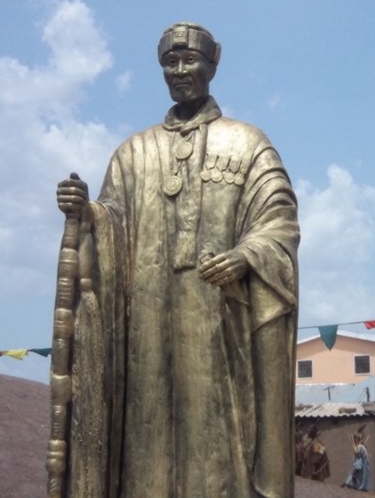
The Bulsa people of northern Ghana, also known as Buluk land, have a proud lineage of traditional leadership rooted in community, resilience, and adaptation. The role of Sandemnaab (Paramount Chief of Buluk) stands at the heart of Bulsa political and cultural identity, representing centuries of evolution from pre-colonial leadership through colonial influence and into modern times.
Early Leadership and the Sandema Chiefdom
The earliest recorded chief in the historical sources is Anaankum (often spelled Naku or Nakon) whose leadership spanned approximately 1850 to 1900 (or slightly beyond). He stood as a central figure in a time when the Bulsa communities were regularly threatened by slave raids, most notably by the Zabarma raider Babatu.
Although a paramount chief did not formally exist in his era, Anaankum emerged as the most influential chief among the Bulsa. Under his leadership, Bulsa warriors resisted repeated incursions. A major turning point came in 1897, when Babatu’s forces were decisively defeated near Kanjaga, a symbolic victory that bolstered Bulsa unity and prestige.
Colonial Transition and the Formation of Paramountcy
Following Anaankum’s death around 1900 or 1901, Sandema experienced a brief leadership gap. British colonial forces, expanding influence in northern Ghana, documented tensions with the Bulsa during this period, even attacking the settlement believing it hostile.
In 1905, the Bulsa people recognized a new leader: Ayieta Ananguna, later recognised as Paramount Chief in 1911–1912 under British administration. His formal recognition marked the creation of the Sandema Paramountcy, a traditional office that carried both community authority and colonial administrative responsibilities.
Leadership amid Colonial Politics
After Ayieta’s death in 1912, the Bulsa faced contested succession:
- Afoko (1912–1927) was chosen with strong British support and even received a medallion for his cooperation and work in recruiting soldiers during World War I. His reign saw increased administrative integration but also early signs of villages like Kunkwa and Kategra seeking autonomy from Sandema’s overlordship.
- Akansugaasa (1927–1932) succeeded Afoko following an election involving chiefs and headmen from across Bulsa communities. He continued in the colonial administrative fold and was entrusted with responsibilities like treasurer of the Native Authority. During his reign, tensions with Kunkwa and Kategra peaked and led those villages to break away from Sandema’s authority.
These early leaders navigated a complex interplay between traditional authority and colonial expectations; their appointments were effectively shaped by British preference, and free election as practiced today was not yet established.
Nab Dr. Ayieta Azantilow: A Pillar of Bulsa Identity
The most transformative leader in modern Bulsa history is Nab Dr. Ayieta Azantilow, enskinned in December 1932 and reigning until November 2006 — one of Ghana’s longest-serving Paramount Chiefs.
Azantilow’s leadership expanded far beyond traditional duties:
- He mobilised communities to build schools, including the first Native Authority Primary Boarding School in 1936, and later championed middle and secondary schools across Bulsa.
- He promoted health and education, built dispensaries, and supported broader development through communal labour.
- During the Second World War, the British colonial government relied on his authority to recruit soldiers and boost wartime morale.
- After independence, he became a respected voice in national leadership structures, from the Northern Territorial Council to the Regional House of Chiefs and the National House of Chiefs. He represented Ghana at international events, cementing Bulsa visibility at home and abroad.
- He also received many honours, both from Ghana and abroad, for his contribution to education, environmental conservation, and cultural heritage.
Azantilow’s reign helped transition the Bulsa traditional system into a modern institution, one that supports cultural festivals like Feok, community unity, and engagement in national development.
Why the History of Bulsa Chiefs Matters
Understanding the lineage of Bulsa chiefs isn’t just about listing names, it’s about appreciating how leadership shaped community resilience, negotiated colonial power, and guided cultural identity. From Anaankum’s resistance to Azantilow’s transformative development leadership, these chiefs reflect Bulsa history itself a narrative of strength, adaptation, and unity.
Sources
- Kröger, Franz. Sandema Chiefs before Azantilow. Buluk – History and Culture of the Bulsa People.
Available at: https://www.buluk.de/Buluk6/Sandemchiefs.htm