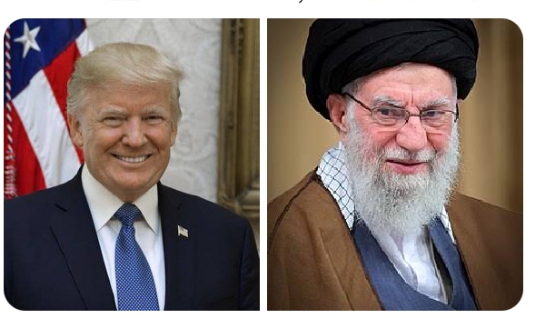
For over four decades, the relationship between the United States and the Islamic Republic of Iran has been defined by sanctions, “shadow wars,” and diplomatic freezes. What was once a cornerstone alliance in the Middle East has transformed into one of the most volatile and dangerous rivalries on the global stage. To understand the current “fight,” one must look back at the moments that broke the bond between Washington and Tehran.
1. The Roots of Resentment (1953–1978)
It is often forgotten that the U.S. and Iran were once close partners. During the Cold War, the U.S. viewed Iran as a strategic buffer against Soviet influence. However, the seeds of distrust were sown in 1953, when the CIA and British intelligence orchestrated a coup to overthrow Iran’s democratically elected Prime Minister, Mohammad Mossadegh, after he moved to nationalize the country’s oil industry.
The U.S. reinstated the Shah (monarch), Mohammad Reza Pahlavi, who ruled with an iron fist for the next 25 years. While he modernized the country, his secularism and perceived status as a “U.S. puppet” fueled a domestic firestorm.
2. The Point of No Return: The 1979 Revolution
The year 1979 changed the Middle East forever. The Islamic Revolution, led by Ayatollah Khomeini, toppled the Shah and established a theocratic republic.
The definitive break occurred when Iranian students stormed the U.S. Embassy in Tehran, taking 52 Americans hostage for 444 days. The Iran Hostage Crisis traumatized the American public and led Washington to sever all formal diplomatic ties, a freeze that remains in place today.
3. The Nuclear Chessboard
In the 21st century, the conflict shifted toward technology and security. The U.S. and its allies have long accused Iran of seeking nuclear weapons, while Tehran insists its program is for peaceful energy.
The 2015 JCPOA (Nuclear Deal) briefly offered a path to peace, as Iran agreed to limit its nuclear activity in exchange for the lifting of economic sanctions. However, the U.S. withdrawal from the deal in 2018 under the “Maximum Pressure” campaign sent tensions skyrocketing, leading to a cycle of Iranian enrichment and American economic warfare.
4. The “Shadow War” and Proxies
The U.S.-Iran fight rarely happens on a traditional battlefield. Instead, it plays out across the Middle East through “proxies.” Iran exerts influence via groups like Hezbollah in Lebanon, the Houthis in Yemen, and various militias in Iraq and Syria.
The U.S. counters this through military presence in the Persian Gulf, sanctions, and occasional direct strikes—most notably the 2020 assassination of Iranian General Qasem Soleimani, which brought the two nations to the brink of full-scale war.
5. The Modern Standoff: 2024 and Beyond
Today, the “fight” is more complex than ever. From cyberattacks and the seizure of oil tankers in the Strait of Hormuz to the spillover of the Israel-Hamas conflict, the U.S. and Iran remain locked in a high-stakes game of chicken.
As Washington navigates regional stability and Tehran seeks to cement its influence, the world watches the Persian Gulf with bated breath. Whether through a new diplomatic breakthrough or a miscalculation leading to conflict, the future of U.S.-Iran relations remains the most critical puzzle in modern geopolitics