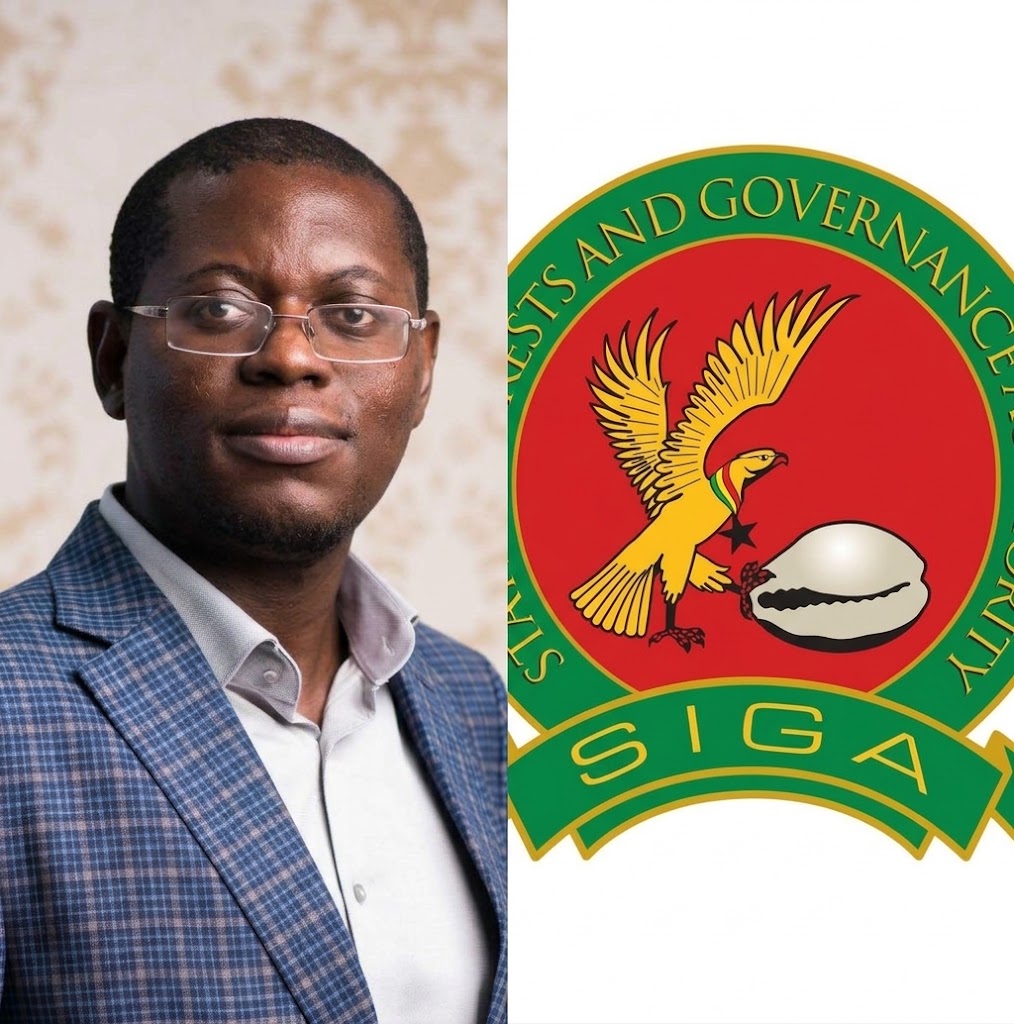
The ongoing national debate over the financial governance of Ghana’s state-owned enterprises (SOEs) took a statistical turn when Bright Simons, Vice President of IMANI Africa, publicly challenged claims made in the 2025 State Ownership Report (SOR) published by the State Interests and Governance Authority (SIGA).
Speaking on JoyNews’ Newsfile, Mr. Simons argued that SIGA’s assertion of recording its highest proportion of audited financial statements was inaccurate, citing that while the 2025 SOR recorded a 66.67% compliance rate among covered entities, the 2021 report registered a 68% rate. On the surface, Mr. Simons’ mathematical observation is accurate. However, a comprehensive analysis of the reporting trajectory under the Public Financial Management Act (Act 921) and the SIGA Act (Act 990) reveals a fundamental flaw in his conclusion: a reliance on relative percentages that completely ignores scale, volume, and expanding institutional coverage.
The Numbers: Percentage vs. Scale
To appreciate the full context of SIGA’s performance, one must look at how the sample size (the total number of Specified Entities covered) has evolved.
In the 2021 State Ownership Report, SIGA’s coverage spanned 139 Specified Entities (SEs). Of those 139 entities, 95 submitted audited financial statements:
In the 2025 State Ownership Report, SIGA expanded its coverage significantly, capturing 162 Specified Entities out of the 175 in existence. Of these 162 entities, 108 submitted audited financial statements:
| Reporting Metric | 2021 SOR | 2025 SOR | Net Progress |
| Total Covered Entities (Denominator) | 139 entities | 162 entities | +23 entities covered |
| Audited Submissions (Numerator) | 95 entities | 108 entities | +13 audited accounts |
| Relative Compliance Percentage | 68.35% | 66.67% | -1.68% difference |
| Whole-of-Government Integration | 19 (in 2020) | 85 entities | +66 entities integrated |
Why the Critique Misses the Target
When evaluating state governance and compliance under public financial laws, judging progress solely by a percentage rate creates significant ambiguities.
1. Unprecedented Volume of Audited Data
In absolute terms, 108 entities submitted fully audited statements for the 2025 report, the highest raw count of audited financial statements processed in SIGA’s history. Compared to 2021’s 95 statements, 2020’s 79 statements, and 2017’s mere 5 statements, 2025 represents a landmark peak in corporate reporting volume.
2. The Penalty of Expanding Oversight
When a monitoring authority expands its net to bring 23 additional entities under public scrutiny (increasing from 139 to 162), it naturally absorbs less compliant, smaller, or newly restructured organizations.
- Had SIGA limited its 2025 reporting scope strictly to the original 139 entities from 2021, receiving 108 audited accounts would have yielded a compliance rate of 77.7%.
- By widening the scope to enforce transparency across 162 entities, the overall percentage was mathematically diluted, even though 13 more entities were brought into full audit compliance.
3. Integration into Whole-of-Government Accounts
Another dimension omitted from Mr. Simons’ critique is the depth of audit integration into national financial accounts. SOE financial statements integrated into Whole-of-Government accounts grew from 19 in 2020 to 76 in 2024, and reached a record 85 entities in 2025. This demonstrates that beyond simple submission, the usability and alignment of state audit reports with national accounting standards have strengthened.
Conclusion: Context Matters in Public Policy Analysis
While policy analysts and civil society organizations play an essential watchdog role in demanding accuracy from state agencies, data must be interpreted through the lens of institutional growth.
Mr. Simons is correct that 68.35% is a higher percentage than 66.67%. However, labeling SIGA’s progress as “inaccurate” based on this single percentage ignores the fact that 2025 saw 108 state entities submit audited financial reports – more than at any other point in Ghana’s history. By focusing on percentage points while ignoring the expanded denominator, the critique obscures the genuine expansion of state governance and oversight.
By: Akunye Michael (0248287304) – A Social Commentator