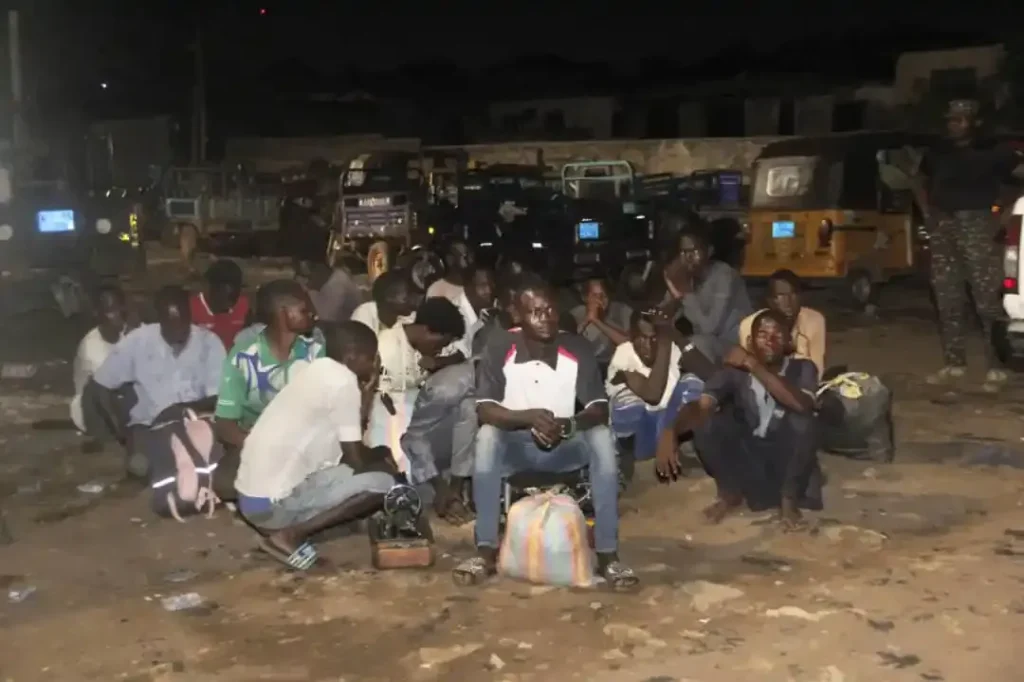
The Ghana Immigration Service (GIS) has rescued 606 undocumented migrants in a large-scale operation targeting street begging networks in the Ashanti Regional capital, Kumasi.
The exercise forms part of a broader nationwide crackdown aimed at dismantling exploitative networks that engage vulnerable foreign nationals, particularly women and children, in organized street begging.
Early Morning Operation Targets High-Risk Areas
According to reports, the operation was conducted in the early hours of Tuesday, April 21, 2026, beginning around 3:30 a.m. and concluding by 5:00 a.m.
Specialised GIS teams swept through known hotspots across Kumasi, including Asawase, Aboabo, Sabon Zongo, Alabar, Akwatia Line, and Dagomba Line, areas identified for high concentrations of street beggars and informal settlements.
The intelligence-led raid was carefully coordinated to disrupt networks believed to be facilitating and sustaining street begging activities.
Children Form Majority of Rescued Migrants
A breakdown of those rescued reveals a deeply concerning trend: out of the 606 individuals, 381 were children, alongside 72 adult females and 153 adult males.
This demographic highlights the growing exploitation of minors in street begging operations, raising serious child protection and human trafficking concerns.
Screening and Possible Repatriation
Following the operation, all rescued individuals were transported to a holding facility in Prampram in the Greater Accra Region. There, authorities will conduct detailed screening processes to determine their identities and nationalities.
While officials have not yet confirmed a timeline, the migrants are expected to be repatriated to their countries of origin after due processes are completed.
Recurring Challenge Despite Previous Efforts
The latest crackdown comes two years after a similar repatriation exercise involving foreign nationals, particularly from neighbouring West African countries. However, many of those previously deported are believed to have returned through porous borders.
This recurring pattern underscores the complexity of migration management and the need for stronger border controls and regional cooperation.
Public Concern Over Urban Impact
Residents and local authorities in Kumasi have long expressed concern over the surge in street begging, citing issues such as sanitation challenges, congestion, and pressure on public resources.
Community leaders argue that the situation has evolved into a persistent urban management problem requiring sustained intervention.
Part of a Broader National Strategy
The GIS has indicated that the operation is part of a wider national strategy to restore order in urban centers and combat organized migration-related exploitation.
Authorities are expected to intensify similar operations across other regions as part of ongoing efforts to address irregular migration and human trafficking.
The rescue of 606 undocumented migrants in Kumasi marks one of the largest recent operations by the Ghana Immigration Service. While it reflects a firm stance against organized street begging networks, it also highlights deeper regional migration and socio-economic challenges that require long-term, coordinated solutions.